Editorial matchup · June 2026

Figure vs K-Scale Labs: Which AI Tool Is Better in 2026?

Side-by-side comparison of Figure and K-Scale Labs — pricing, features, and use cases. Reviewed by our editorial team in Jun 2026.

Use-case score 11Updated Jun 2026
K-Scale Labs logo

K-Scale Labs

AI/ML Models
4.5Paid105
The verdictUse-case score · 11

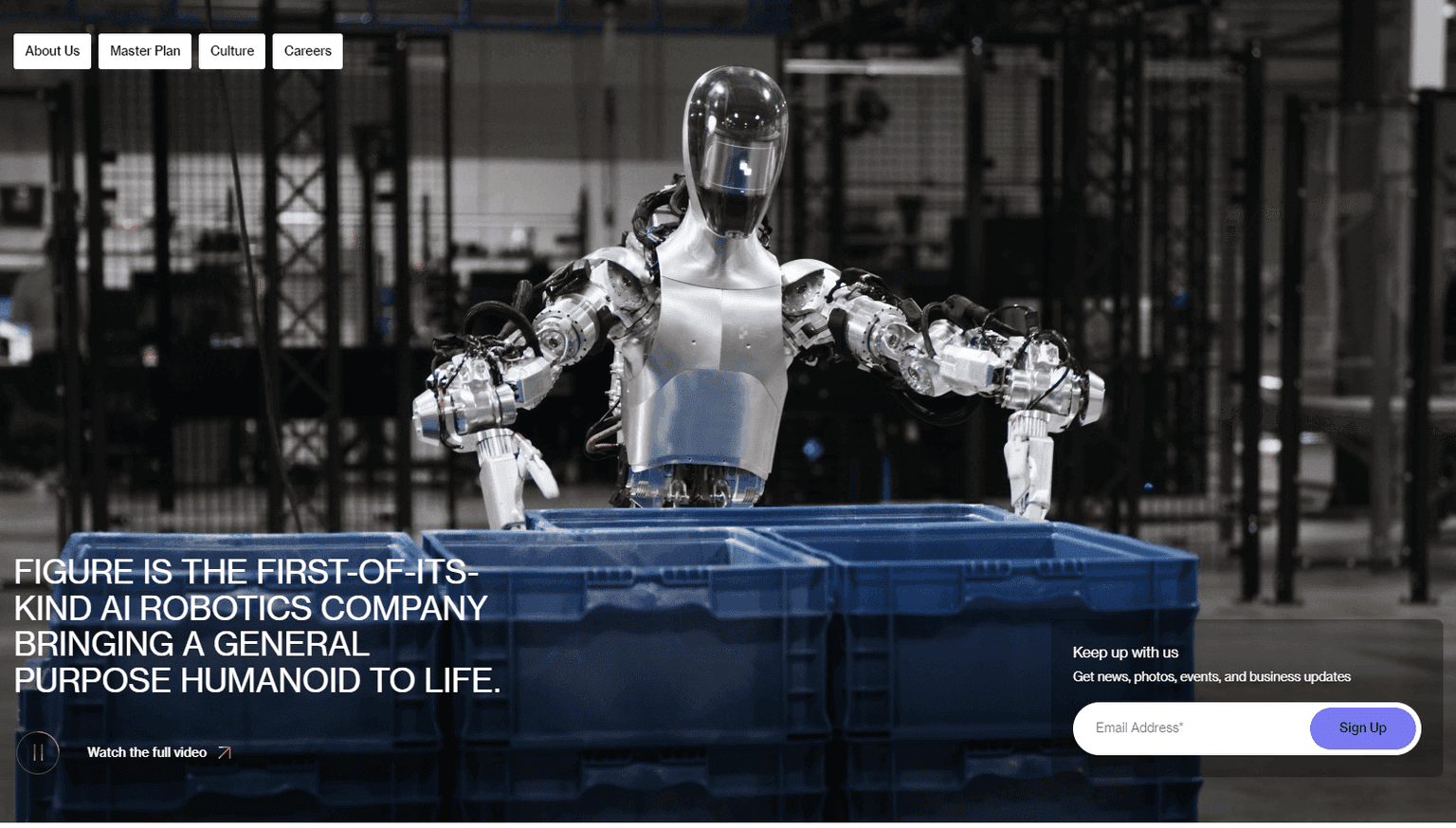
Figure and K-Scale Labs pursue fundamentally different strategies in humanoid robotics, each justified by their distinct markets and philosophies. Figure AI has crystallized itself as the enterprise-first, closed-source player targeting immediate industrial deployment at scale.

As of June 2026, Figure has achieved 24x production acceleration at its BotQ facility—ramping from 1 Figure 03 per day to 1 per hour in under 120 days—with over 350 units already delivered.

The Figure 03, introduced in October 2025 and powered by Helix 02, demonstrates continuous unsupervised operation and has completed 250,000 package-sorting tasks in a single 200-hour logistics test at near-human speed.

Figure's roadmap includes factory floor deployments throughout 2026, with ambitions to reach robot-built production lines within 24 months and home automation by year-end.

The company's 39 billion-dollar valuation (as of late 2025) and backing from Microsoft, NVIDIA, OpenAI, and Jeff Bezos underscore institutional conviction in its vertical-integration approach.

K-Scale Labs, founded in 2024 and a Y Combinator alum, takes the opposite direction: an open-source platform designed to democratize humanoid development.

Its Z-Bot (under 20 pounds, 1.5 feet tall) targets students and hobbyists at 999 dollars, while K-Bot (4 feet 7 inches, 77 pounds) serves researchers and developers at 8,999 dollars.

K-Scale has open-sourced its entire hardware designs under permissive license, K-OS runtime in Rust, and reference vision-language-action stack—explicitly inviting global collaboration over proprietary control. The firm passed 1 million dollars in orders since launch in July 2025, signaling genuine grassroots adoption.

Where Figure is optimizing for production speed and enterprise integration, K-Scale is optimizing for developer accessibility and community-driven innovation.

Figure wins on near-term industrial traction and autonomous task capability; K-Scale wins on community potential and accessibility for long-tail robotics researchers. Neither is objectively superior—they serve incompatible markets at incompatible price and control tiers.

The larger narrative pits closed-loop proprietary scaling against open-source distributed acceleration, a 20-year-old dynamic that has repeated across AI and robotics without clear categorical victors.

T
ToolDirectory.AIEditorial Team

Enterprise warehouse & logistics automation

Figure

Figure 03 has proven production viability with 250,000-package logistics tests and ongoing BMW and Catalyst Brands deployments. K-Scale lacks commercial deployment history.

Robotics research & prototyping on a budget

K-Scale Labs

K-Bot open hardware designs and Z-Bot at 999 dollars make autonomous robotics accessible to university labs and indie engineers. Figure targets enterprise customers only.

Unsupervised household autonomy

Figure

Figure 03 with Helix 02 demonstrated dishwasher loading and laundry folding under full autonomy. K-Bot roadmap targets autonomy but remains in early alpha with basic locomotion.

Section 01

Best for what

4 use cases scored. Figure wins 1, K-Scale Labs wins 1.

  • Pricing value

    Neither tool publishes a starting price.

    Even
  • Free tier

    Neither tool offers a free tier or trial.

    Even
  • User ratings

    Figure averages 4.6 / 5 vs 4.5 / 5 on the other side.

    Figure
  • Review volume

    K-Scale Labs has 104 ratings vs 98 on the other.

    K-Scale Labs
Section 02

Pros & cons

Where each tool earns its rating — and where it falls short.

Figure logo

Figure

AI Infrastructure
Pros
  • Figure 03 achieves 1 robot per hour production at BotQ (24x improvement in 120 days), moving from prototype to scalable manufacturing faster than any competitor in the field.
  • Helix 02 vision-language-action model enables end-to-end task learning: dishwasher loading, package sorting, laundry folding—all demonstrated in production contexts.
  • Proven commercial traction: BMW production-line deployments, Catalyst Brands logistics partnerships, and 350+ units in field operation generating real-world behavioral data.
  • Perception-conditioned whole-body control demonstrates zero-shot sim-to-real transfer on complex tasks like stair traversal without domain-specific fine-tuning.
  • Fleet telemetry infrastructure and over-the-air updates allow rapid iteration across deployed robots, turning every unit into a data-collection engine.
Cons
  • Proprietary stack limits researcher access and ecosystem collaboration; closed-source approach contradicts open innovation trends in AI foundation models.
  • No public pricing model disclosed; enterprise customers must negotiate custom terms, limiting transparency for smaller companies evaluating ROI.
  • Rapid iteration and production acceleration increase surface area for unknown failure modes in home and unfamiliar industrial contexts not yet encountered at scale.
  • Dependency on NVIDIA Helix and custom silicon (dual RTX GPUs) creates supply-chain concentration and raises long-term unit costs versus modular open designs.
  • Figure 02 safety incident raised in late 2025 (potential for skull fractures) underscores mechanical strength risks in unsupervised home deployment.
Section 03

At a glance

Every spec on one page. Live-pulled from each tool's detail page.

  • Pricing
    Inquire
    Paid
  • Pricing model
    Paid
    Paid
  • Free tier
    No
    No
  • Free trial
    No
    No
  • Rating
    4.6 / 5 (98 ratings)
    4.5 / 5 (104 ratings)
  • Saves
    151
    105
  • Categories
    AI Infrastructure, AI/ML Models
    AI/ML Models, AI Agents
  • Verified
    Yes
    No
  • Top 100 tier
  • Last updated
    Jun 2026
    May 2026
Frequently asked

Figure vs K-Scale Labs FAQs

Quick answers to the questions readers ask before picking between these two.

What is the difference between Figure 03 and K-Bot in terms of autonomy?

Figure 03 with Helix 02 demonstrates full unsupervised autonomy on complex household and logistics tasks: sorting packages, loading dishwashers, folding laundry—all proven in production settings. K-Bot is in public alpha and currently supports only basic locomotion and balance control; full-autonomy releases are planned for later 2026 and beyond. Figure wins decisively on demonstrated autonomous capability.

Can I build my own K-Bot at home?

Yes. K-Scale released K-Bot hardware designs under a permissive open-source license (CERN-OHL-S), with components sized to fit standard 3D printers. Many parts are 3D-printed carbon fiber, and the full bill of materials costs less than 10,000 dollars. However, precision assembly and integration of actuators, sensors, and compute still require significant mechanical engineering skill and tools.

How much does a Figure 03 cost?

Figure does not publish a standard list price; pricing requires direct enterprise negotiation. Industry analysts and reports suggest Figure 03 targets enterprise lease-to-own or bulk purchase agreements at comparable or lower total cost of ownership than human labor over 3-5 years, but exact per-unit or per-month terms are confidential.

Is K-Scale Labs' software truly open source?

Yes. K-Scale OS (the Rust-based operating system), vision-language-action models, simulation tools, and reference software stack are all published under open-source licenses (GPL v3 for software, CERN-OHL-S for hardware). The GitHub repositories include over 100 active projects and welcome community contributions and forks.

When will K-Bot be available for commercial use?

K-Bot is available for pre-order and early shipping as of July 2025, but it remains in public alpha. The company explicitly states users should anticipate breaking changes and incomplete autonomy features. Production availability and full autonomy roadmap milestones have not been publicly committed.

Which platform is safer for home use?

Figure 03 was designed from scratch for home environments with soft goods, wireless charging, wireless data offload, and safety-hardened battery management. However, a November 2025 product-safety incident raised concerns about injury potential. K-Bot has not been deployed in homes and remains in research/hobby phase. Neither has comprehensive home safety certifications as of June 2026.

Does Figure 03 require constant human supervision?

No. Figure 03 demonstrates continuous unsupervised operation, including overnight runs and outdoor mobility at ~2 m/s without teleoperation. However, deployment in truly novel environments (unseen household layouts, unexpected obstacles) may require periodic re-training or operator-in-the-loop tuning.

Bottom line

Choose Figure AI if you are a logistics, manufacturing, or retail enterprise deploying humanoids to replace labor in harsh or repetitive warehouse and factory environments.

Figure 03's proven production capability, Helix autonomy, and commercial partnerships justify the enterprise tier cost for teams that cannot afford trial-and-error learning curves.

Choose K-Scale Labs if you are a university robotics lab, independent researcher, or startup building task-specific humanoid systems and need affordable open hardware and software to iterate on foundation models, sim-to-real pipelines, or novel embodied AI approaches.

K-Scale's ecosystem is designed for the developer-researcher long tail that closed platforms ignore. Do not choose Figure expecting consumer home deployment at reasonable cost in 2026—the roadmap targets late 2026 home pilots, not production retail availability.

Do not choose K-Scale expecting production-ready logistics automation—the platform is still in alpha and lacks commercial deployment history. As of June 2026, this is a split between a capital-intensive manufacturing play (Figure) and a community-driven research accelerant (K-Scale).

Figure leads on near-term enterprise ROI and autonomy capability; K-Scale leads on long-term ecosystem potential and research accessibility.

Related matchups

Keep comparing

More engineering & simulation head-to-heads.

Sign up for our newsletter

Receive weekly updates so you can stay up-to-date with the world of AI