Perplexity vs ChatGPT in 2026: which should be your default?

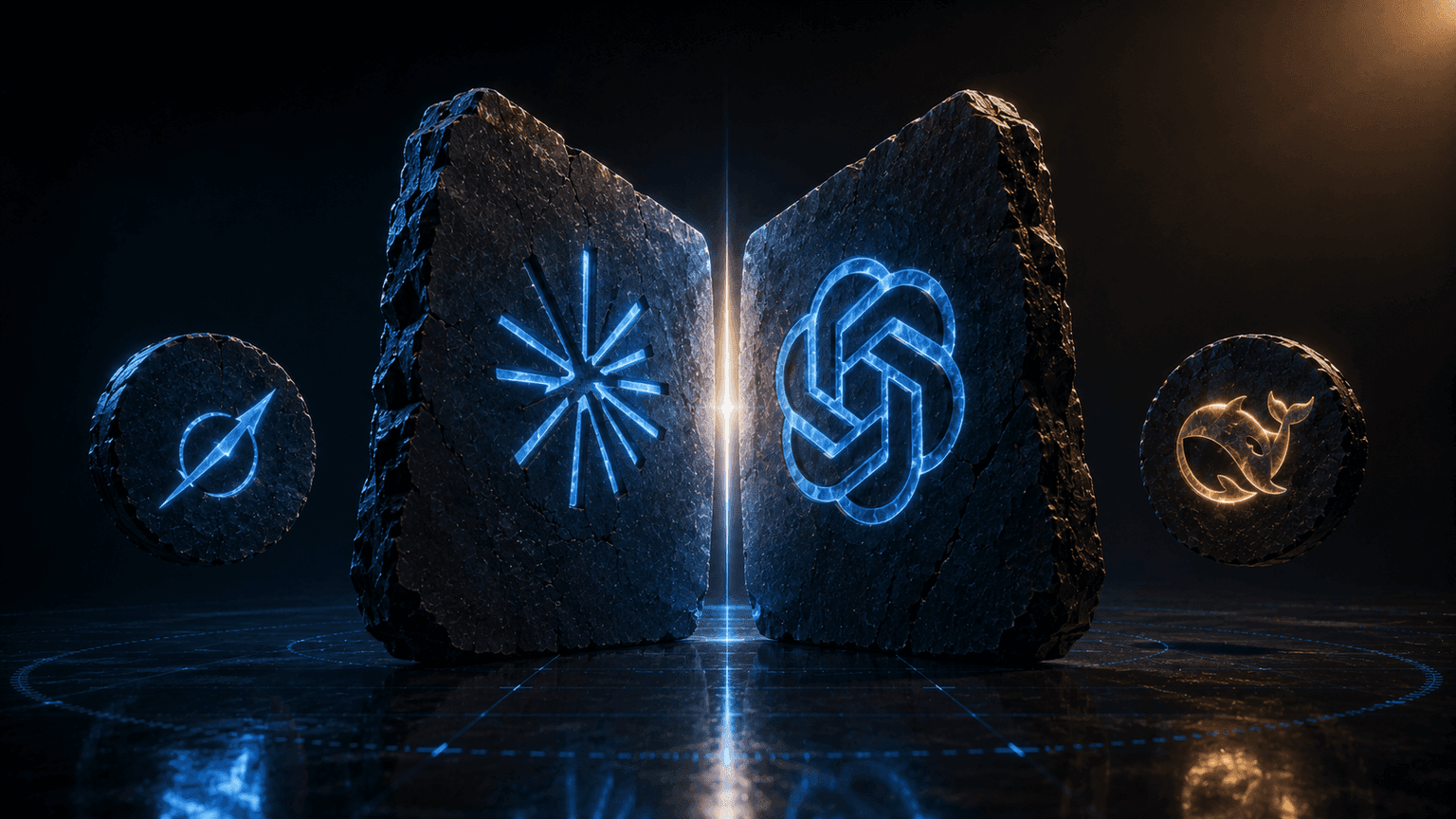
Perplexity vs ChatGPT is no longer a niche debate — it's the question of what an AI search engine should be. We ran Perplexity and ChatGPT side by side for 30 days, asking the same questions of both, and the answer splits cleanly: Perplexity is a search engine that answers, ChatGPT is an assistant that searches. Which one deserves the default slot in your browser depends on whether your day is mostly questions or mostly work. And 2026 added two complications worth taking seriously — Grok's real-time firehose and DeepSeek's free frontier-class reasoning — so we tested those against ChatGPT too.
Here's the honest read, with pricing verified in July 2026.
Quick verdict
| You mostly… | Use | Why |
|---|---|---|
| Ask questions with checkable answers | Perplexity | Inline citations on every claim; its whole product is sourcing |
| Do work — writing, files, projects, code | ChatGPT | Memory, projects, scheduled tasks; search is one tool among many |
| Follow breaking news and live chatter | Grok | Live X integration; nothing else is as current |
| Want frontier-class reasoning for $0 | DeepSeek | Free chatbot; V4 preview reasoning punches at paid-tier level |
| Want one tool for a whole team | ChatGPT | The plan ladder and admin story are the most complete |
What actually separates Perplexity and ChatGPT in 2026
Perplexity is built outward from search. Every answer carries inline citations, and its paid tiers are pitched at research: Pro subscribers pick between frontier models — Claude Sonnet 5, Gemini 3.1 Pro, GPT-5.6 Terra, and Perplexity's in-house Sonar 2 — and answers can draw on licensed data from sources like PitchBook and Wiley that a plain web crawl can't reach. The 2026 additions push past search: Perplexity Computer builds documents, reports, and small apps from a prompt on a credit system, and the Comet browser wraps the whole experience around the web itself.
ChatGPT comes at it from the other direction. Search is built into every tier — including free — but it's one capability inside an assistant that also carries memory across conversations, projects, file analysis, scheduled tasks, custom GPTs, and code execution. In our 30 days, ChatGPT's answers to searchable questions were good and its citations have improved, but sourcing is visibly not the organizing principle the way it is at Perplexity: it cites to support an answer; Perplexity answers to organize its sources.
Production credibility: we watch this from an unusual seat. ToolDirectory.AI receives referral traffic when AI engines cite our pages, and our analytics have been unambiguous for months: ChatGPT sends us more than ten times the visitors Perplexity does — Perplexity's first real referrals only appeared in our logs this month. If you publish on the web, ChatGPT is where AI-driven readers actually come from; Perplexity's citations are more visible in its interface but drive far fewer clicks out.
Perplexity vs ChatGPT pricing (verified July 2026)
| Tier | Perplexity | ChatGPT |
|---|---|---|
| Free | Yes — core answers with citations | Yes — limited GPT-5.5 Instant, search included |
| Budget | — | Go, $8/month (expanded limits; may include ads) |
| Standard | Pro, $17/month billed annually | Plus, $20/month (GPT-5.6 reasoning models) |
| Heavy | Max, $167/month billed annually | Pro, from $100/month (GPT-5.6 Sol Pro, 5–20x usage) |
Two pricing notes from the fine print. ChatGPT's new $8 Go tier is the first mainstream AI plan that says it "may include ads" — worth knowing before you recommend it to a team. And Perplexity's headline prices are annual-billing rates; monthly billing runs higher.
Grok vs ChatGPT: the real-time wildcard
Grok has one structural advantage no rival can copy: live integration with X. For breaking news, market chatter, and anything where the answer changed in the last hour, Grok vs ChatGPT isn't close — Grok's answers cite posts and primary sources as they happen, while every other engine works from a crawl that lags. Its multi-agent mode (parallel agents that split a hard question and show their reasoning) is genuinely useful for research questions, and image and video generation are built into the same thread.
The trade-offs: xAI keeps SuperGrok and SuperGrok Heavy pricing behind a login rather than on a public pricing page, the X-centric worldview shapes what surfaces first, and there is no equivalent of ChatGPT's projects-and-memory workspace. Use Grok as the second opinion for anything time-sensitive; it's not yet a first tool for daily work.
DeepSeek vs ChatGPT: the free disruptor
DeepSeek remains the price anomaly of the category: the chatbot is free, the models are open-weight, and the API undercuts every Western lab. This month it shipped a V4 preview claiming top-tier reasoning with substantially improved agent capabilities, and in our testing its step-by-step reasoning on hard analytical questions holds up against paid tiers elsewhere. For a student or a builder on zero budget, DeepSeek vs ChatGPT is a real question now.
The trade-offs are equally real: it's a China-based service, which is a compliance non-starter for many companies; its web search is serviceable rather than central; and there's no ecosystem — no projects, no scheduled tasks, no app layer. It wins as the free reasoning engine, not as the everything tool.
The elephant in the comparison: Google's AI Overviews
Most people never choose an AI search engine — they get one by default, because Google now answers a large share of queries with an AI Overview above the results. That default matters for this comparison in two ways.
First, it sets the bar. In our testing, both Perplexity and ChatGPT beat AI Overviews on any question with depth — multi-step research, comparisons, anything where you'd want to interrogate the answer. AI Overviews win on speed for throwaway lookups, and nothing else.
Second, it explains why the challengers behave the way they do. Perplexity's citations-first design and ChatGPT's push into search both exist because the default engine stopped sending people to sources — a shift we've covered from the publisher side in our AI Overviews analysis. When you pick a default on purpose, you're choosing which answer economy to participate in.
So which should be your default in 2026?
Our recommendation after 30 days, by person rather than by feature list:
- You research for a living (analyst, journalist, buyer): make Perplexity the browser default. The citation discipline and licensed data pay for themselves, and Pro's model choice means you're never stuck with one lab's blind spots.
- You make things for a living (writer, marketer, developer): keep ChatGPT primary. Search-in-assistant covers most lookups, and the memory, projects, and file workflows are where your hours actually go.
- You trade or follow news: add Grok. Its live X integration is a capability the others structurally cannot match, and the multi-agent mode is a real second opinion on hard questions.
- You're cost-constrained: DeepSeek free tier for reasoning, Perplexity free tier for cited search. That $0 stack would have embarrassed $60-a-month setups from eighteen months ago.
The pattern across all four: nobody wins everything, and the products are diverging rather than converging — search-first, assistant-first, realtime-first, and price-first are four different bets on what people want from AI. That divergence is why "which one" now has a real answer per person, where a year ago it mostly didn't.
How we compared
We ran the same 40 questions through all four products over 30 days — factual lookups with checkable answers, breaking-news queries, multi-step research questions, and everyday work tasks — on both free and paid tiers. We scored answer accuracy, citation quality (does the source actually say that?), recency, and how each product behaves when it doesn't know. Pricing was verified against each vendor's public pricing page in July 2026; where a vendor doesn't publish a price, we say so rather than guessing. The referral observation comes from our own site analytics, which we track weekly as part of our state of AI search coverage. For the assistant-side question — ChatGPT against Claude and Gemini rather than against search engines — see our three-way comparison. No vendor paid for placement or saw this piece before publication.
Frequently asked questions
What is Perplexity? Perplexity is an AI search engine: you ask a question in plain language and it answers in prose with inline citations to the sources it drew from, instead of returning a list of links. It was founded in 2022, runs on a mix of in-house (Sonar 2) and frontier models, and has expanded into a browser (Comet) and a document-and-app builder (Perplexity Computer).
Is Perplexity better than ChatGPT? For questions where you need to verify the answer — research, purchasing decisions, anything with numbers — yes: Perplexity's inline citations and licensed data sources make checking claims faster. For everything else you do with an AI (writing, files, projects, code), ChatGPT is the more complete tool. Most heavy users we know keep both: Perplexity as the search engine, ChatGPT as the assistant.
Is Perplexity AI free? Yes. The free tier includes cited answers and is genuinely usable. Pro — $17 a month billed annually — adds frontier model choice (Claude Sonnet 5, Gemini 3.1 Pro, GPT-5.6 Terra), deeper sourcing including licensed financial and scientific data, and Perplexity Computer credits.
What is Perplexity Pro? Perplexity's standard paid plan: model selection across the top frontier models, higher usage limits, premium data sources like PitchBook and Wiley, and access to Perplexity Computer, which builds reports, documents, and small apps from prompts on a credit system.
Who owns Perplexity AI? Perplexity is an independent, venture-backed startup founded in 2022 by Aravind Srinivas and co-founders, with backers that have included IVP, NVIDIA, and Jeff Bezos across its funding rounds. It has not been acquired.
What is the best AI search engine in 2026? Perplexity, if "search engine" means cited answers to checkable questions. ChatGPT if you want search folded into a general assistant, and Grok if recency matters more than anything else. Google's AI Overviews are the default most people get without choosing — our piece on what AI Overviews are doing to the open web covers why that default is worth questioning.
Is DeepSeek better than ChatGPT? On price, unambiguously — frontier-class reasoning for free is DeepSeek's entire pitch, and the new V4 preview strengthens it. On product completeness, no: ChatGPT's memory, projects, search, and app ecosystem have no DeepSeek equivalent, and China-based data handling rules DeepSeek out for many workplaces.
— The ToolDirectory.AI editorial team

Perplexity.ai
Perplexity.ai is a platform designed to assist users in searching and understanding complex topics.
Freemium
4.92
423
ChatGPT
OpenAI's flagship AI assistant for chat, coding, image and video generation, and agentic tasks.
Freemium
4.88
581

Grok
Elon Musk's xAI aims to understand the universe's true nature.
Paid - Inquire
4.92
483
Get the weekly roundup.
One email each Friday. The week's additions, the week's deaths, and one thing we changed our mind about. No drip sequences, no AI-generated filler.