Best AI Tools for Holistic Wellness and Mental Health (2026)







Best AI Tools for Holistic Wellness in 2026
If you're looking for the best AI tools for holistic wellness in 2026, the category has changed shape since 2023. The biggest shift is that mental-health AI matured into a clinically-validated category — Wysa secured an FDA Breakthrough Device designation, Woebot continued its long track record of CBT-based support, and the broader "AI for wellbeing" conversation now includes proper safety guardrails alongside the meal-planning and fitness coaches.
This guide covers the six AI wellness tools that actually deliver value in 2026: Wysa, Woebot Health, MealMind, ChefGPT, BurnBacon, and Vacay. Each is rated for what it ships in production, what regulatory status it carries (where applicable), and where the honest 2026 limitations are.
This page is for informational purposes only and is not medical advice. If you are in crisis, contact emergency services or a qualified mental health professional. AI tools are supplements to — not replacements for — professional care.
The Three Lanes of AI for Wellness in 2026
Wellness AI used to be a grab-bag of meal apps with chatbots bolted on. In 2026 the category has matured into three distinct lanes:
- Mental health AI: clinically-grounded chatbots and therapy support tools, with at least some regulatory engagement. Leaders: Wysa, Woebot Health.
- Nutrition and meal planning: AI-driven meal plans, recipe generation, and dietary guidance personalized to your goals. Leaders: MealMind, ChefGPT.
- Fitness, lifestyle, and travel: AI for workouts, motivation, and the broader "how do I live well" lane. Leaders: BurnBacon, Vacay.
The practical move in 2026 is to treat mental-health AI as a separate, more carefully-evaluated category from the lifestyle tools — different stakes, different regulatory landscape, different safety bar.
Quick Comparison
| Tool | Best for |
|---|---|
| Wysa | Mental health AI. Best for evidence-based CBT support and stress/anxiety management. FDA Breakthrough Device designation. |
| Woebot Health | Mental health AI. Best for daily mental-health check-ins with conversational CBT. Long clinical track record. |
| MealMind | AI meal planning. Best for personalized meal plans aligned with dietary goals. |
| ChefGPT | AI personal chef. Best for recipe ideas and culinary insights, with a generous free tier. |
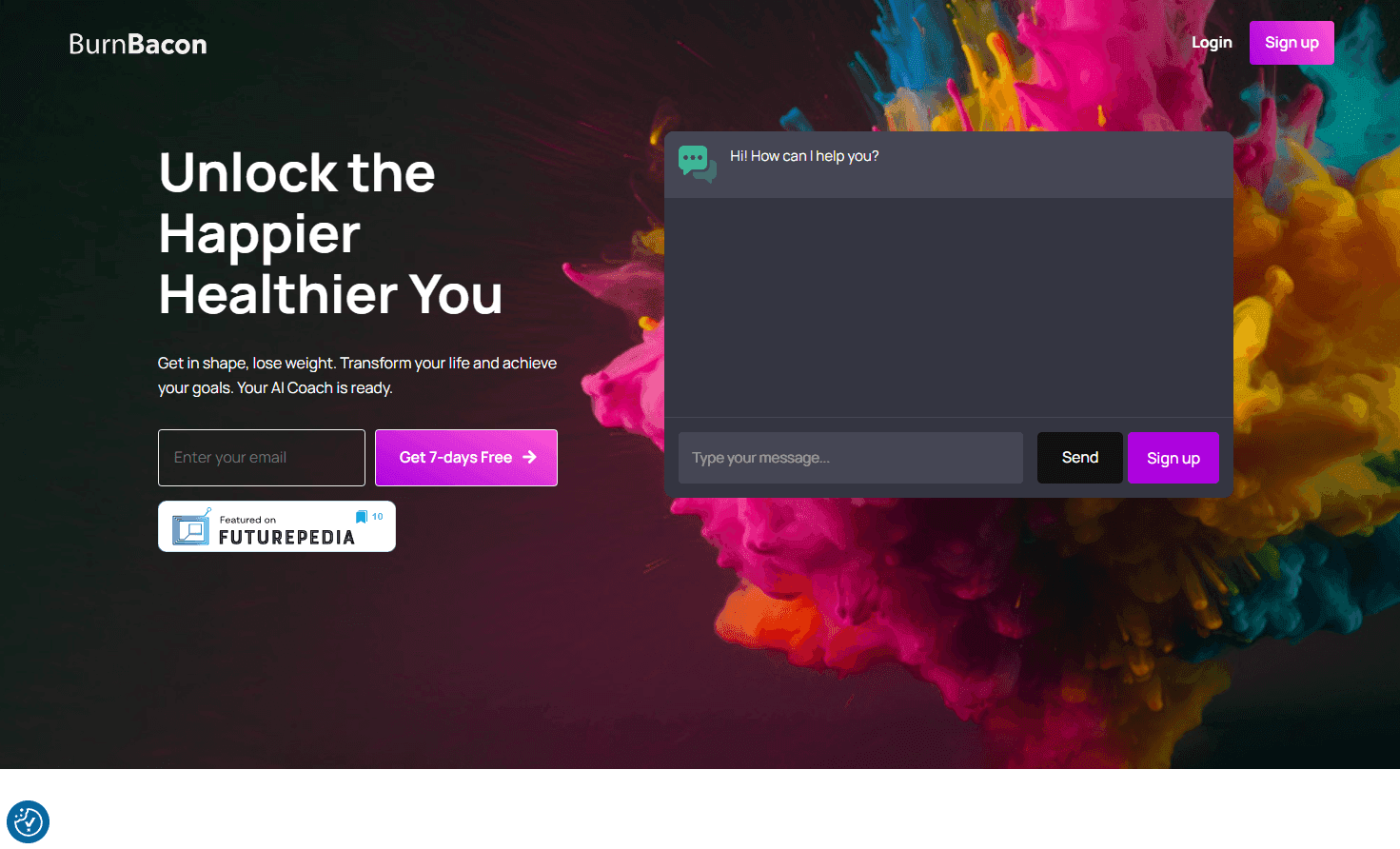
| BurnBacon | AI fitness coach. Best for personalized workout coaching with motivational support. |
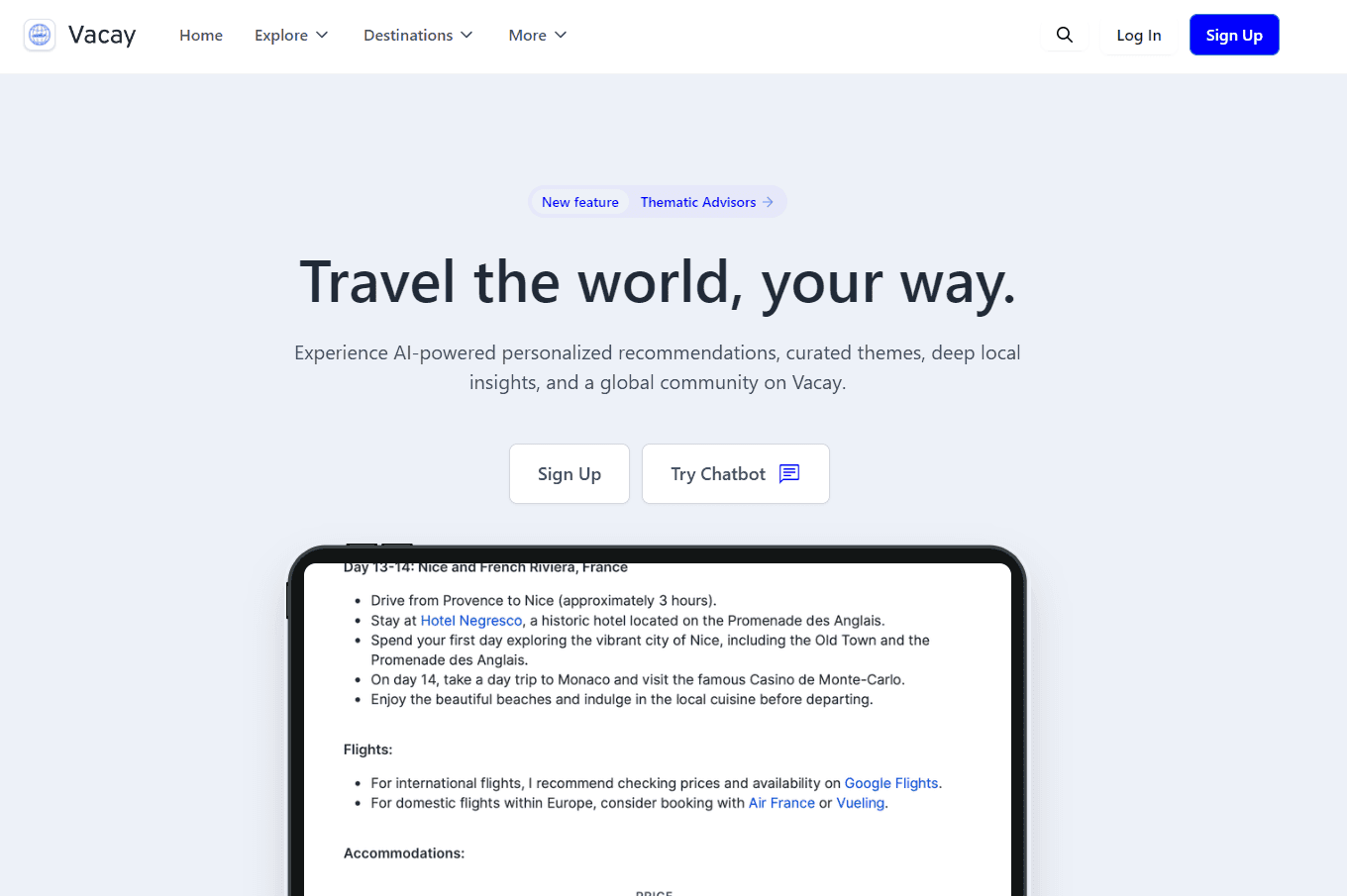
| Vacay | AI travel planner. Best for personalized trip planning and travel recommendations. |
Mental Health AI: The Newly-Mature Category
Mental-health AI is the lane that has changed most since 2023. The leaders below are clinically-grounded, have engaged seriously with regulatory bodies, and are designed with safety guardrails — explicit crisis routing, clinically-validated frameworks, transparency about limitations. This is not a category for evaluating by demo.
1. Wysa — Clinically-Validated AI Mental Health Support
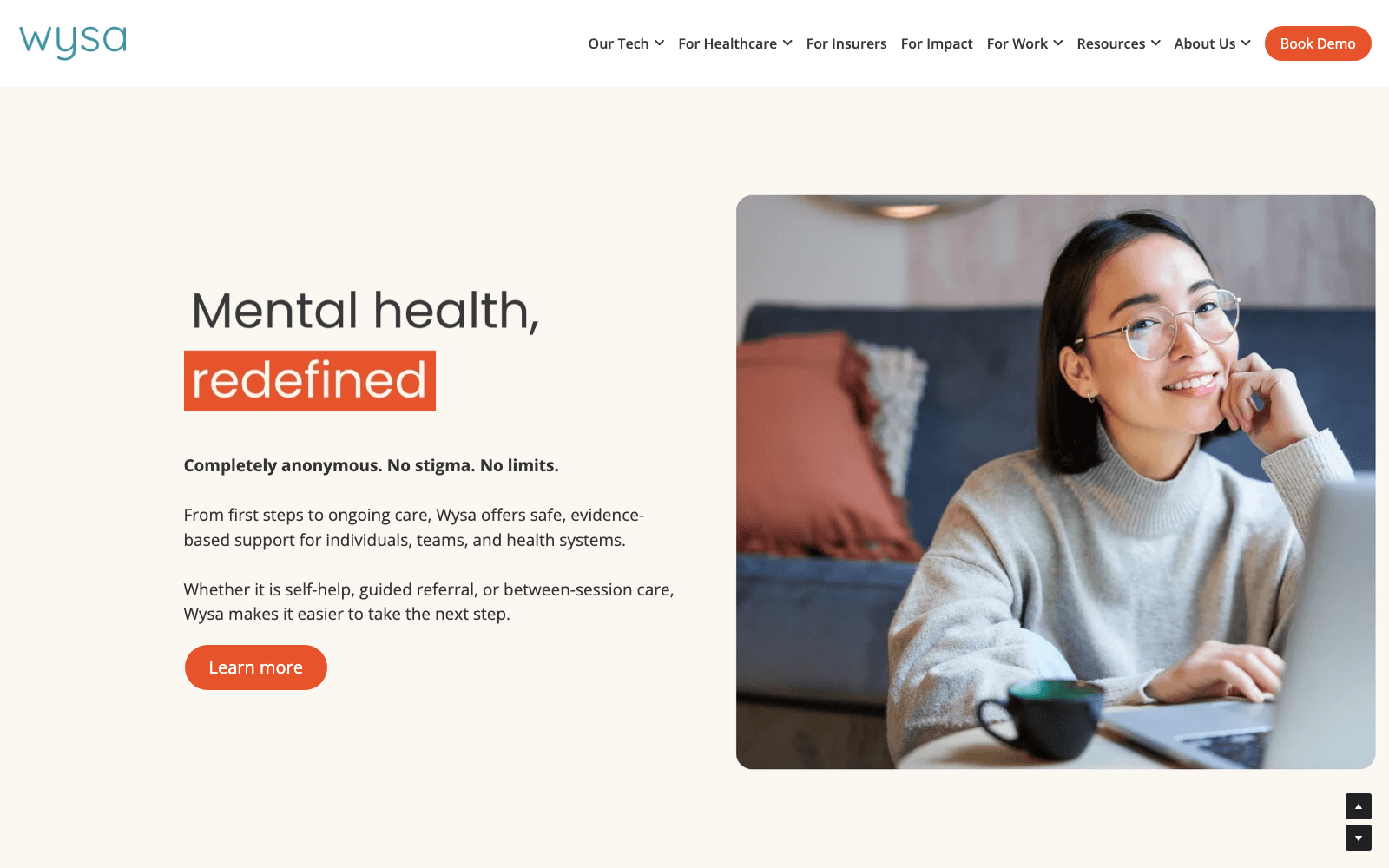
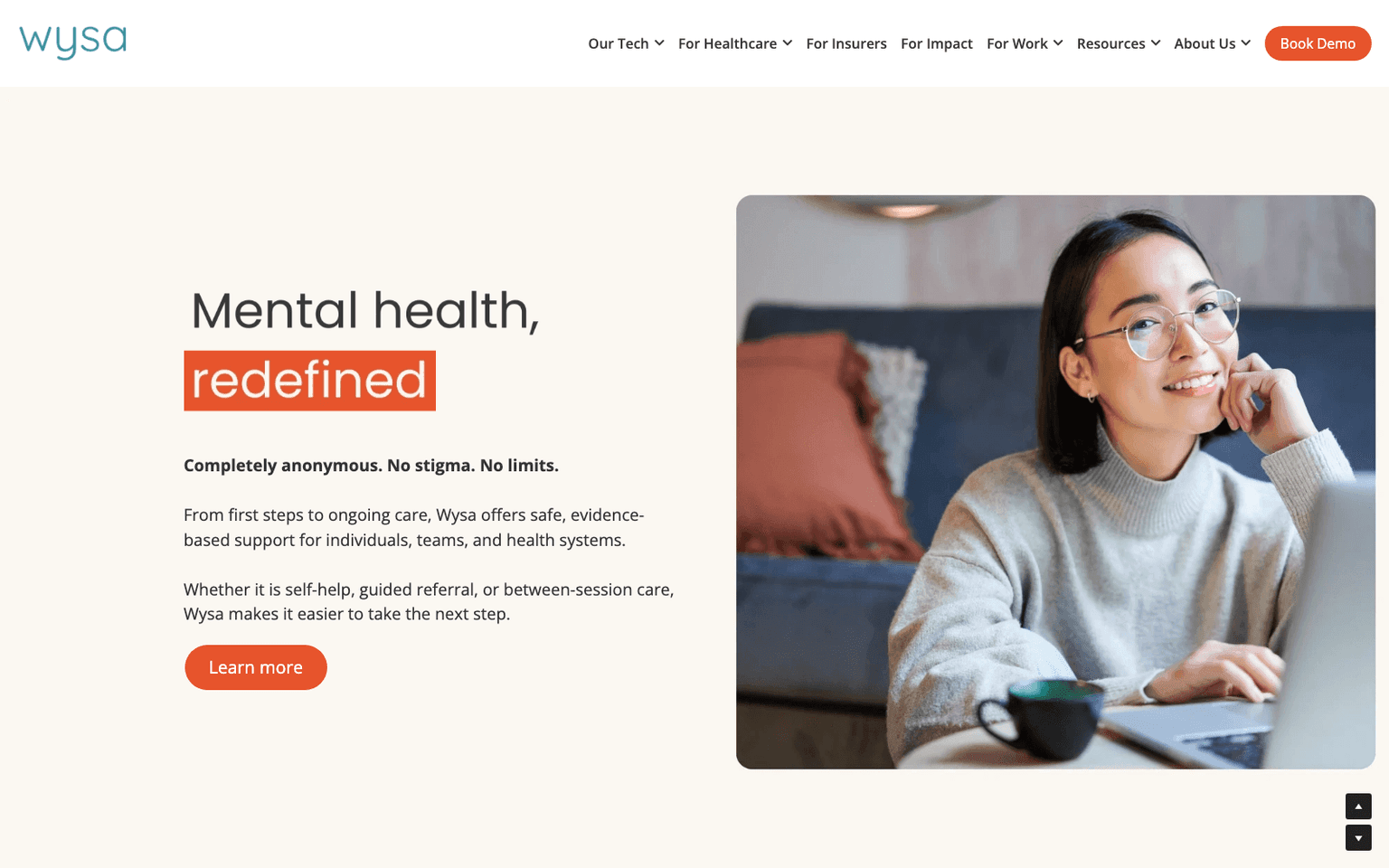
Wysa is the most clinically-credible AI mental-health tool in 2026. Its CBT-based AI conversation framework has been peer-review-published, the platform secured an FDA Breakthrough Device designation, and the enterprise version is deployed across employer benefits programs and the UK NHS. The product is explicitly positioned as augmentation, not replacement — guides users through evidence-based exercises and routes appropriately when a human should be involved.
What it wins at: evidence-based mental-health support at scale, employer benefits and NHS deployment, and a genuinely safety-focused design philosophy that respects the seriousness of the use case.
Where it falls down: not a substitute for professional therapy in serious cases. The free tier is functional but capped; meaningful daily use requires the paid or enterprise-sponsored tier.
2. Woebot Health — Daily CBT Check-Ins
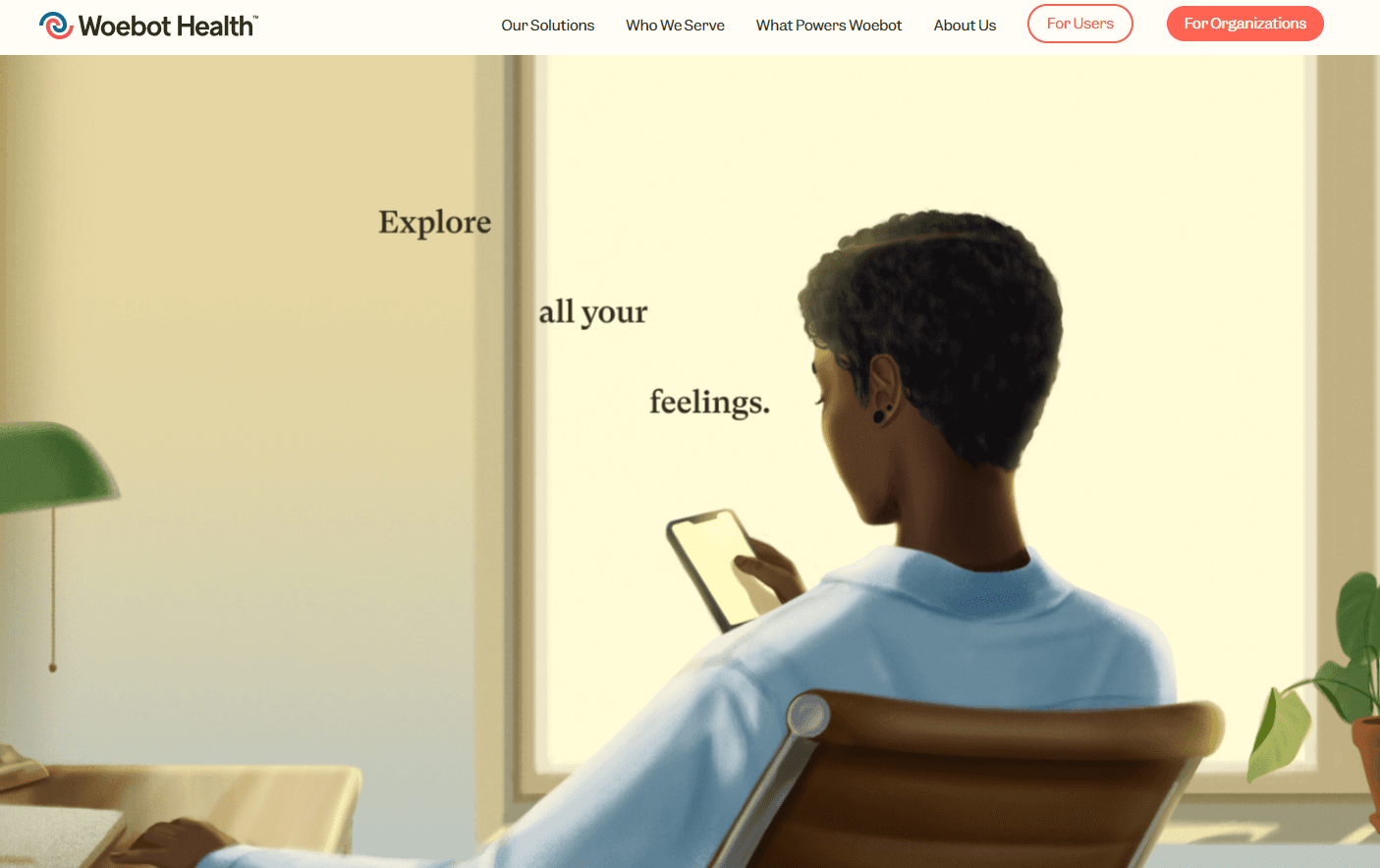
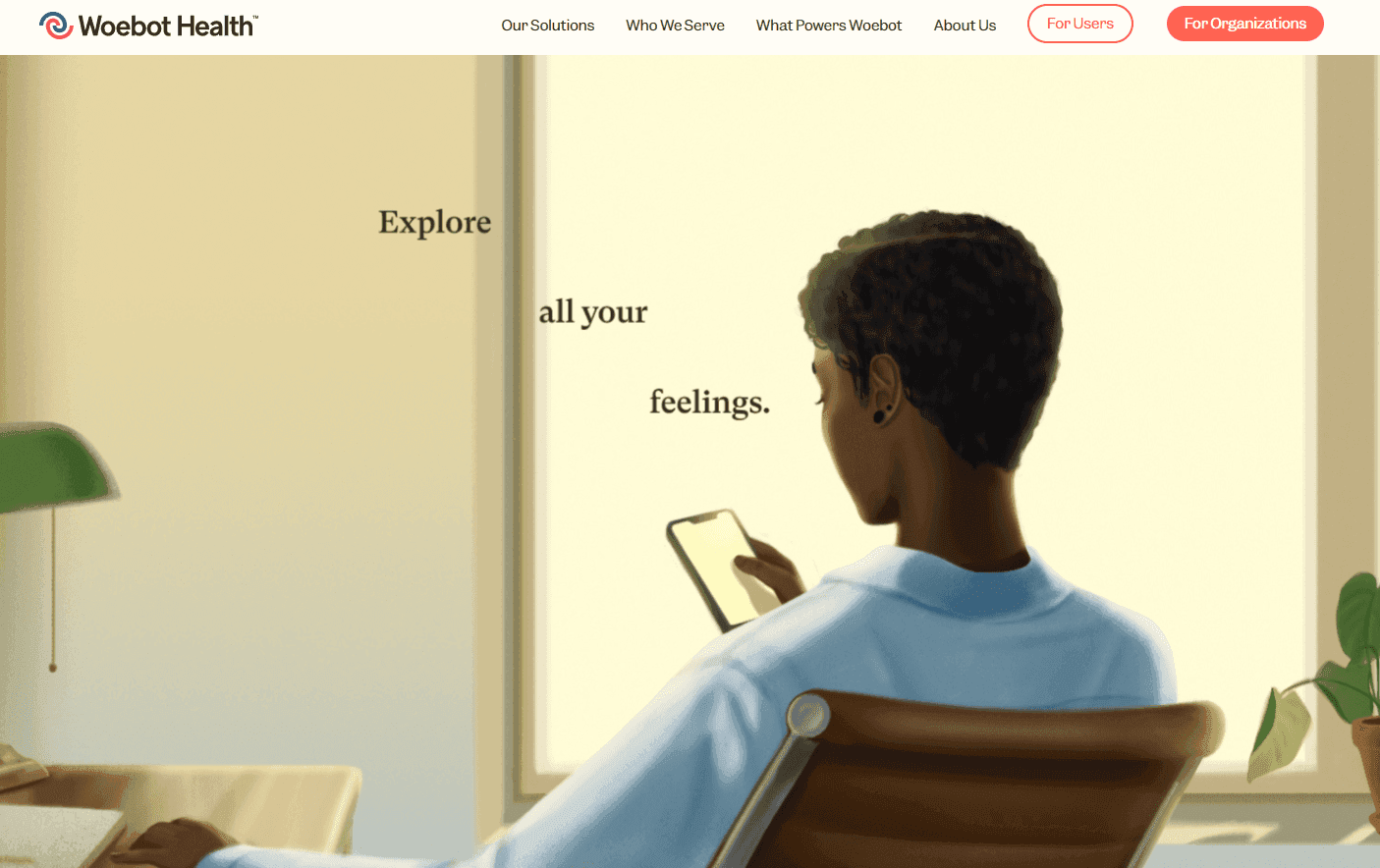
Woebot Health was one of the first conversational mental-health AIs to take a serious clinical approach, and it has continued to publish research and refine its CBT-based framework over multiple years. The product is positioned as an on-demand mental-health ally — daily check-ins, mood tracking, and CBT-style exercises rather than open-ended therapy.
What it wins at: consistent clinical research backing, daily-use cadence that builds habits, and a clear scope (mood support and CBT exercises) that doesn't oversell what AI can do.
Where it falls down: the conversational style is more structured and less open-ended than newer LLM-based competitors — that's a feature for clinical safety and a friction point for users expecting ChatGPT-style flexibility.
Nutrition and Meal Planning
3. MealMind — Personalized AI Meal Planning
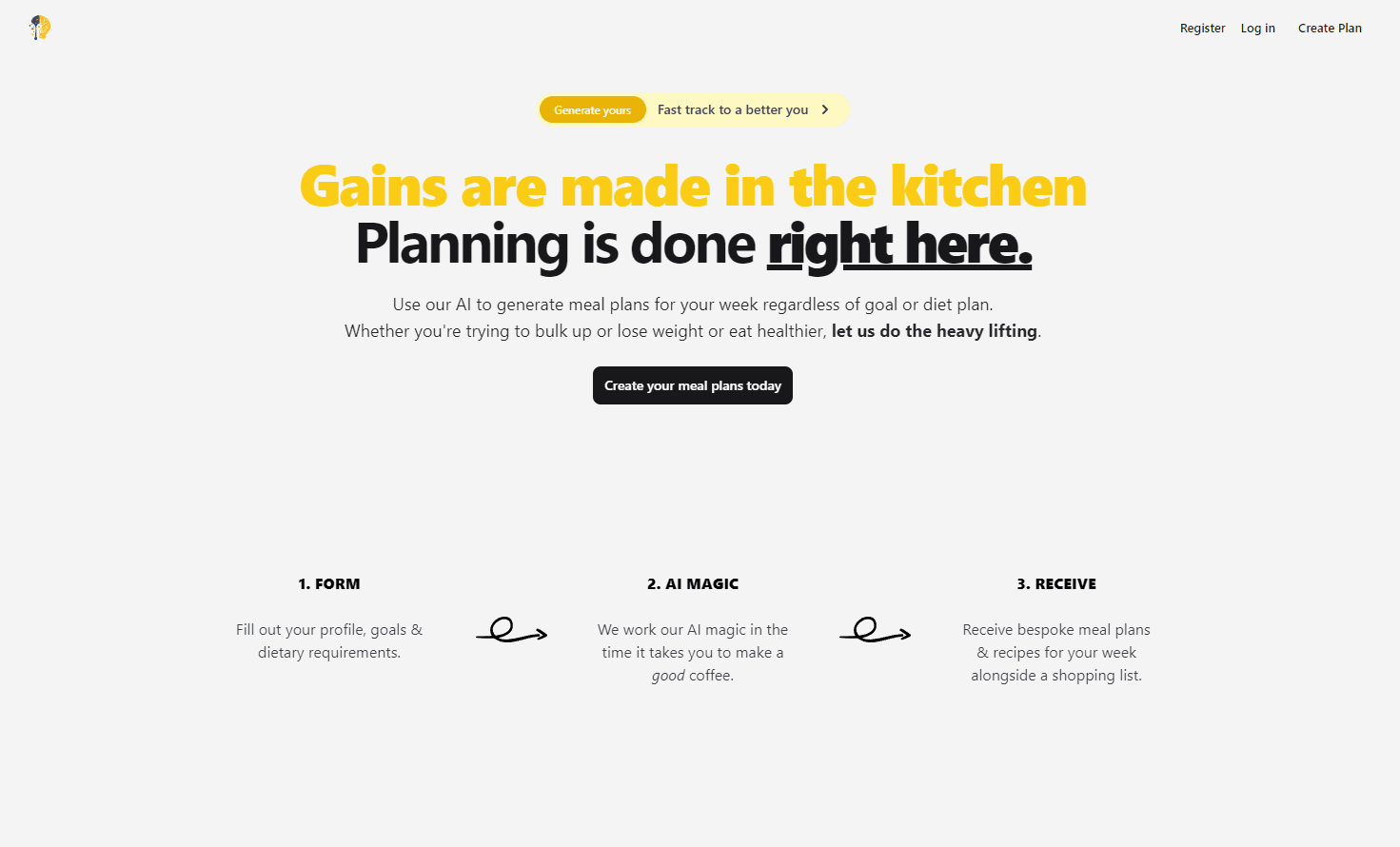
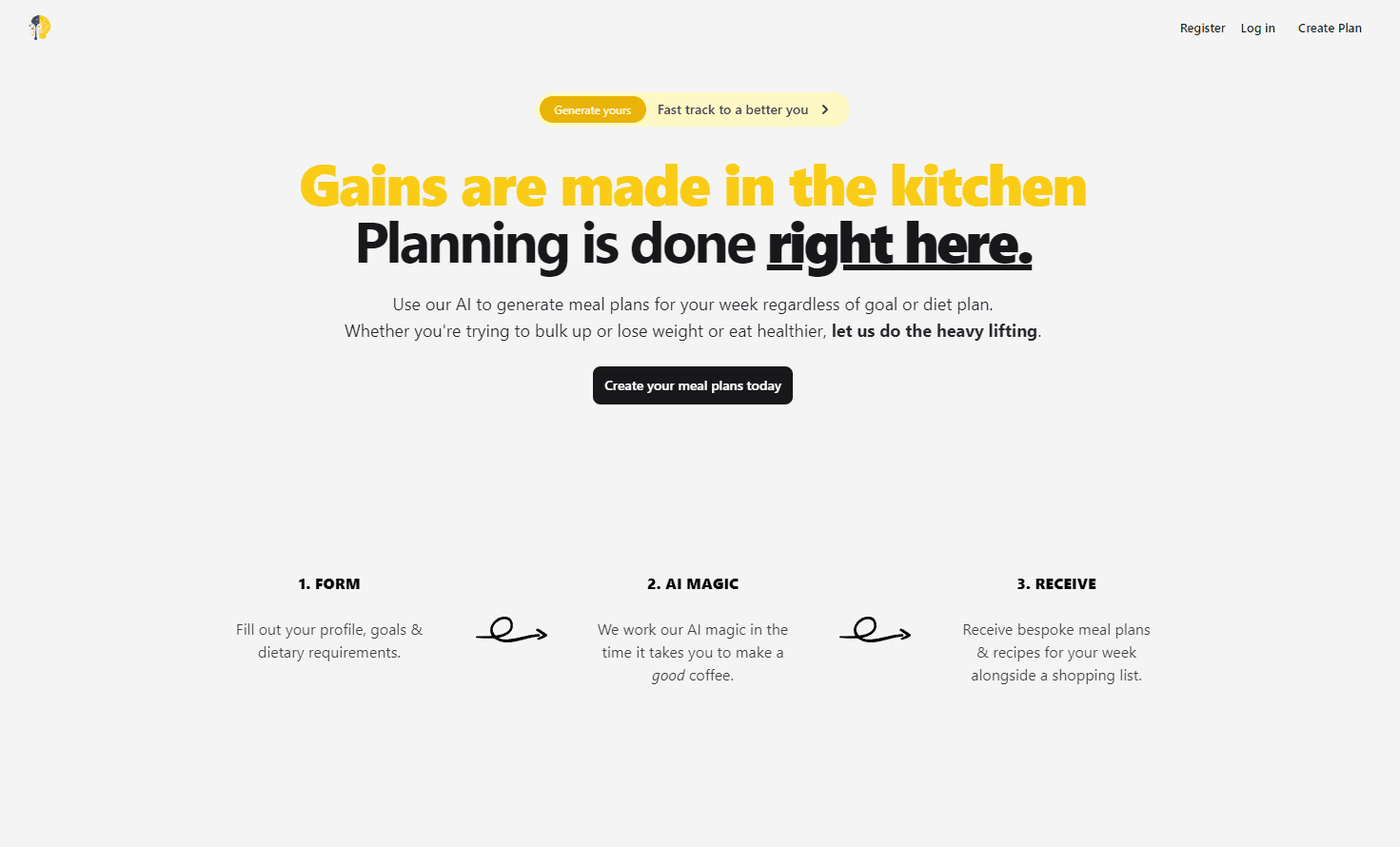
MealMind generates meal plans tailored to your dietary goals, restrictions, and preferences — high-protein, weight-loss, gluten-free, plant-based, or any combination. For users who know what they want to eat but don't want to plan it weekly, AI takes the cognitive overhead off the calendar.
What it wins at: structured meal planning for users with specific goals (athletes, dietary restrictions, weight management), recipe variety, and grocery-list generation that closes the loop on planning.
Where it falls down: medical-grade nutrition advice is outside scope — for clinical conditions (diabetes, kidney disease, severe allergies), work with a registered dietitian. AI personalization works well for general-fit goals and less well for highly individual constraints.
4. ChefGPT — AI Personal Chef
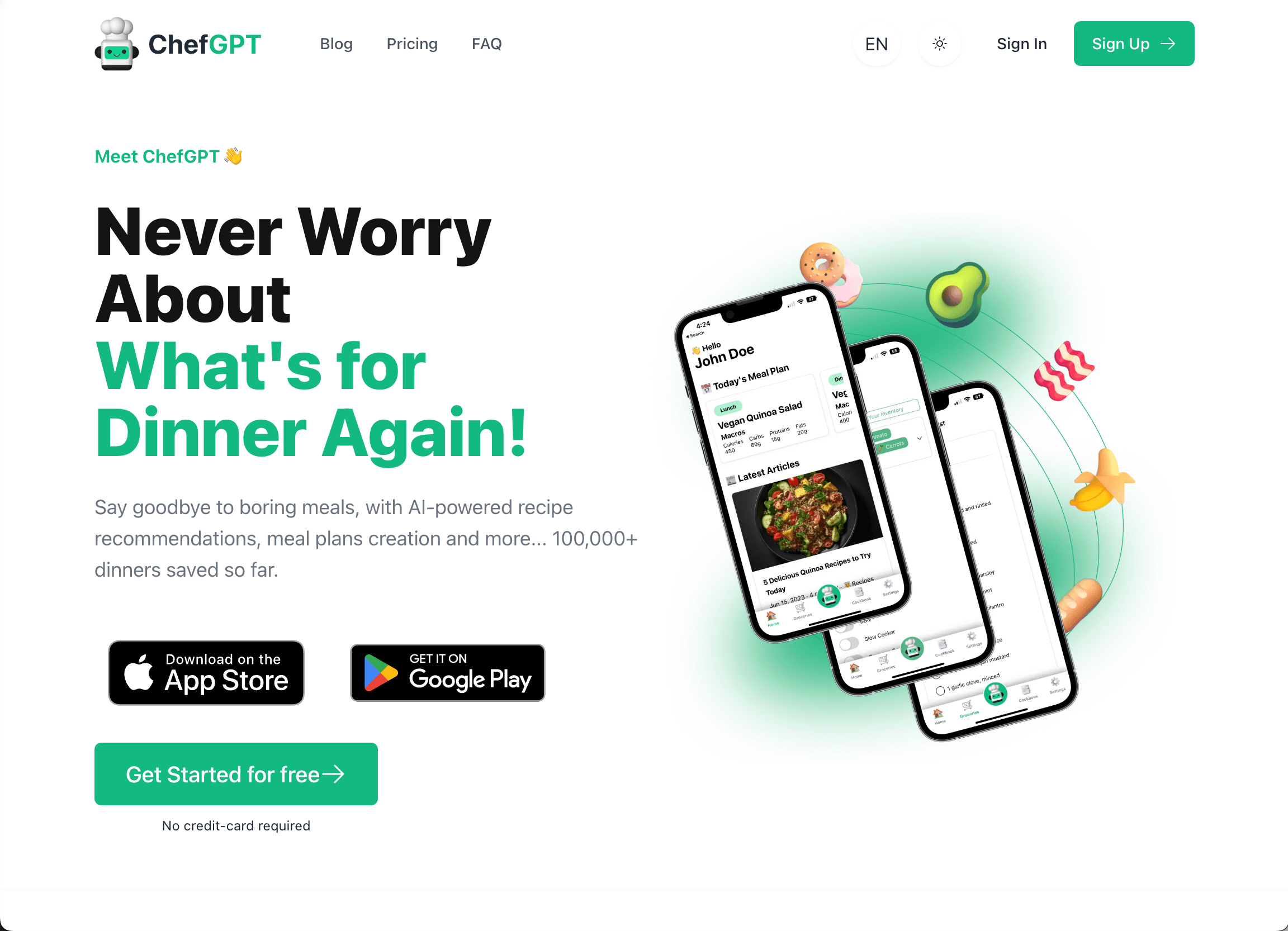
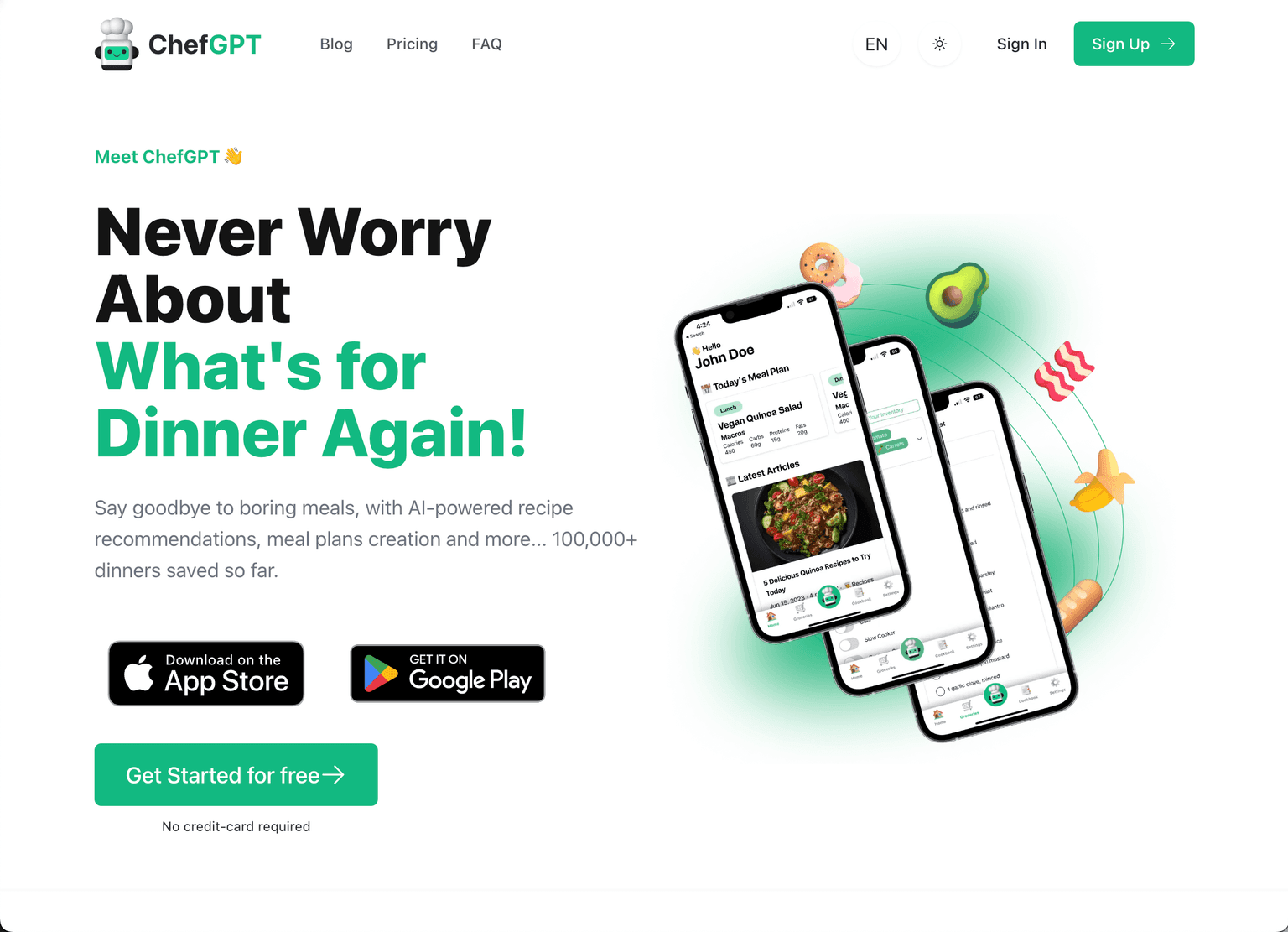
ChefGPT is the right tool for users whose problem is "what do I cook tonight" rather than "plan my whole nutrition strategy." Recipe recommendations based on ingredients you have, dietary preferences, and cuisine style — plus culinary tips and meal ideas for specific occasions.
What it wins at: recipe discovery from what's in your fridge, casual home cooks looking for variety, and a free tier that's genuinely usable without paying.
Where it falls down: less structured than MealMind for serious meal planning. Best as a daily "what should I make" companion rather than a strategic nutrition tool.
Fitness, Lifestyle, and Travel
5. BurnBacon — AI Fitness Coach
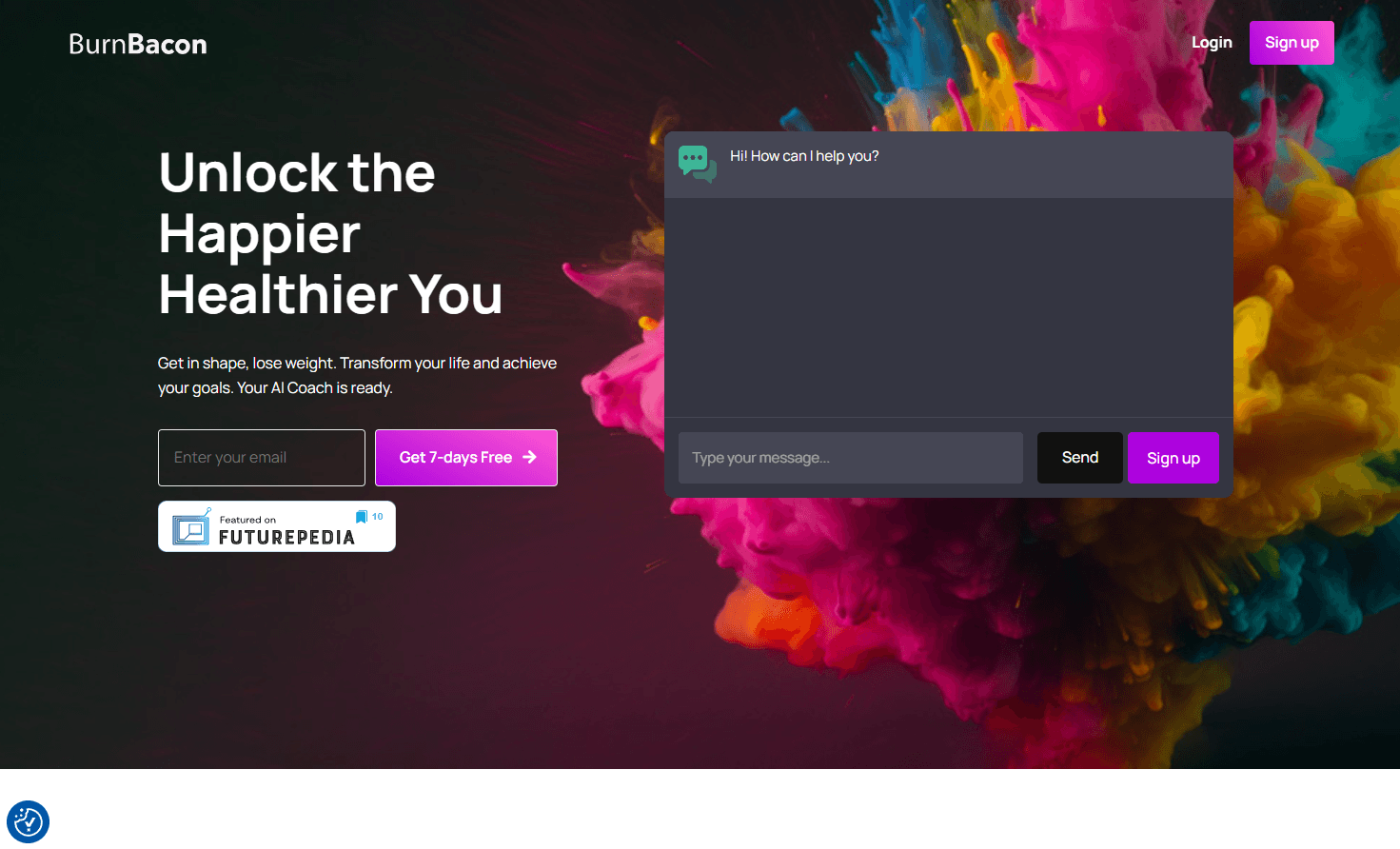
BurnBacon takes the AI fitness-coach pattern seriously — personalized workout plans based on your goals, equipment access, and fitness level, paired with curated meal plans and motivational support. Better-fit for users who'd benefit from a structured program than for users who already have a workout routine they like.
What it wins at: personalized workout programs at meaningfully lower cost than a human coach, motivational accountability, and the meal-plan integration that addresses the "abs are made in the kitchen" reality.
Where it falls down: AI coaches are no substitute for a real personal trainer for users with serious training goals or injury history. Form-correction and movement coaching are still gaps for AI.
6. Vacay — AI Travel Planning
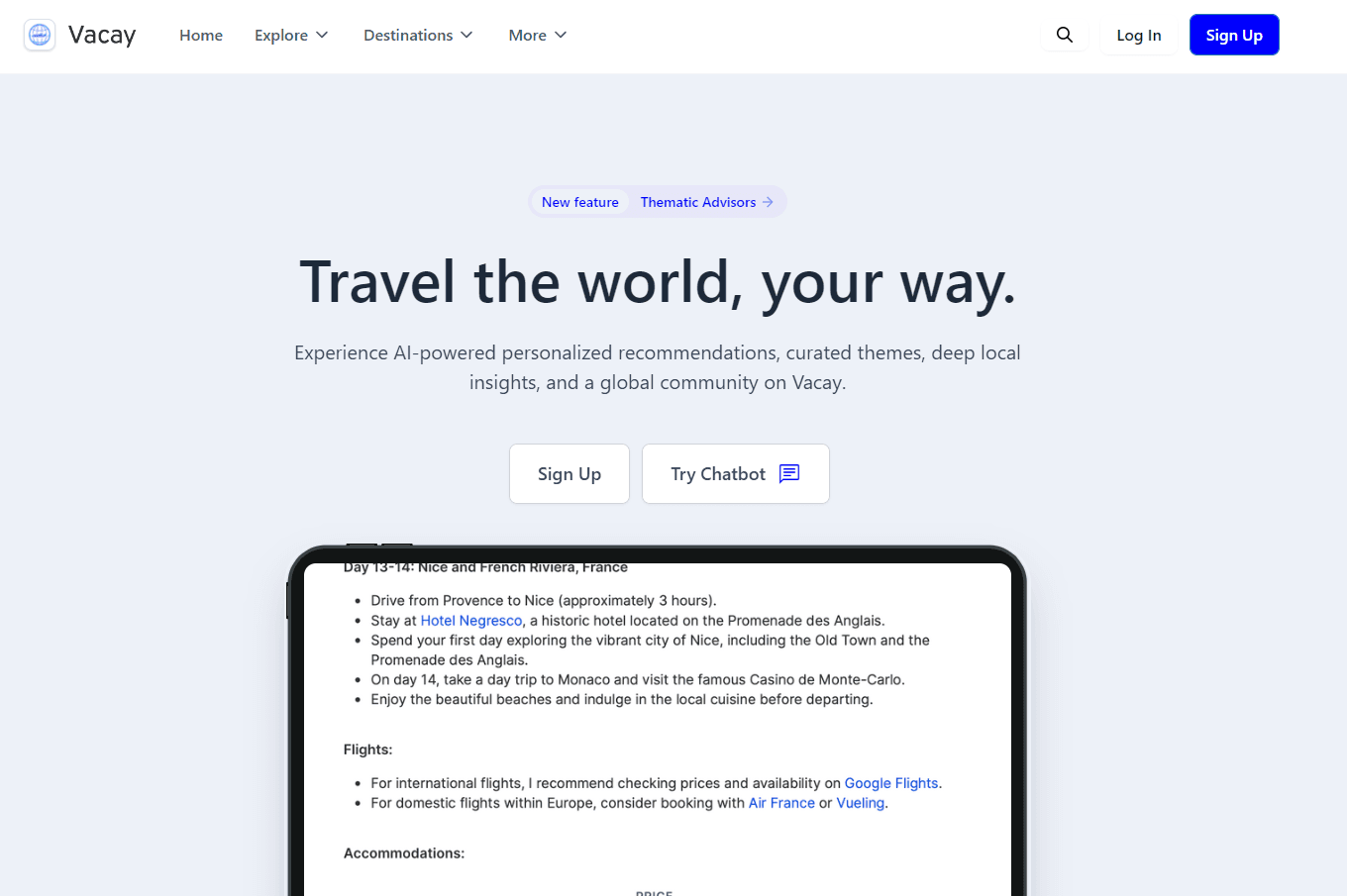
Vacay handles the travel slice of "holistic wellness" — personalized destination recommendations, itinerary planning, and trip recommendations matched to your travel style and constraints. Useful for users who want to travel more deliberately but don't want to spend hours doing the research.
What it wins at: trip ideation, itinerary generation that hits the major sights and the lesser-known recommendations, and a faster path from "we should take a trip" to "here's the actual plan."
Where it falls down: booking integration and real-time pricing are weaker than dedicated travel platforms. Best paired with a booking tool (Google Flights, Hopper) for the transactional side.
How to Build Your 2026 AI Wellness Stack
For most people, the practical move is to pick one tool from each lane that genuinely fits a real need:
- Mental health support: Wysa or Woebot Health — but only as supplement to, not replacement for, professional care
- Meal planning: MealMind for structured plans, ChefGPT for daily recipe discovery (you can run both — they're cheap)
- Fitness: BurnBacon if you need a structured program; otherwise existing fitness apps may already serve you
- Travel: Vacay when you're planning a trip; not a daily-use tool
The biggest mistake we see is users trying to subscribe to wellness AI for problems they don't actually have. Pick one tool that addresses an actual pain point and use it for 30 days before adding another. AI wellness tools are supplements to disciplined habits, not replacements for them.
For adjacent reading, see our Best AI Tools in Healthcare for the clinical and provider-facing side.
Frequently Asked Questions
Are AI mental health tools safe? The leading clinical platforms (Wysa, Woebot) are designed with safety guardrails, clinical research backing, and explicit crisis routing for situations that exceed AI's appropriate scope. They're safe within the lane they're designed for — non-crisis support, evidence-based exercises, daily check-ins. They are not safe substitutes for professional therapy in serious or crisis situations.
Can AI replace a therapist? No. Even the most clinically-validated AI tools are explicit about being supplements to professional care, not replacements. AI mental-health tools shine for daily check-ins, CBT exercises between sessions, and supporting users who otherwise wouldn't have access to any mental-health resource. A human therapist remains the right call for diagnosis, complex issues, and crises.
Are AI meal plans actually personalized? For general-fit goals (weight loss, fitness, dietary preferences) the personalization is real and useful. For clinical conditions — diabetes, kidney disease, severe allergies, eating disorder recovery — work with a registered dietitian. AI personalization is shape-of-meals, not medical-grade nutrition.
Will AI fitness coaching get me real results? For users who currently have no structure, yes — measurable improvements come from following any decent program consistently. For users with serious goals (powerlifting, marathon training, recovering from injury), AI coaches are weaker than a qualified human coach who can see your form and adjust. Most general-population fitness goals don't require that level of expertise.
What about privacy with mental-health AI? The major clinical platforms have strong privacy practices, including HIPAA compliance for the US market and GDPR compliance for the EU. Read each platform's privacy policy specifically — "AI mental health" is a sensitive data category and the differences between vendor practices matter more here than in most categories.
Are these tools covered by insurance? Increasingly yes for the clinically-validated mental-health tools (Wysa, Woebot) — both have employer-benefit and insurance-covered tiers in some markets. Meal planning, fitness, and travel are not insurance categories. Check your specific employer benefits package.
Final Thoughts
The AI wellness category in 2026 is more credible than it was two years ago — particularly on the mental-health side, where clinical validation has caught up with the marketing. For users genuinely interested in using AI to support a balanced lifestyle, the practical move is to pick one tool from one lane that addresses an actual pain point, use it consistently, and add others only if the first one earns the second.
Avoid the pattern of subscribing to four wellness apps you'll use for two weeks each. The teams shipping these products know that retention is hard; the users getting real value are the ones who pick deliberately and stick with it.
Categories these tools span
More collections you may also like


Sign up for our newsletter
Receive weekly updates so you can stay up-to-date with the world of AI
Sign up for our newsletter
Receive weekly updates so you can stay up-to-date with the world of AI
The AI tools directory for discovering, exploring, and comparing the most innovative AI tools in the industry