
Niantic Labs
Explore Niantic Labs, creators of real-world AR games and apps that inspire outdoor exploration.
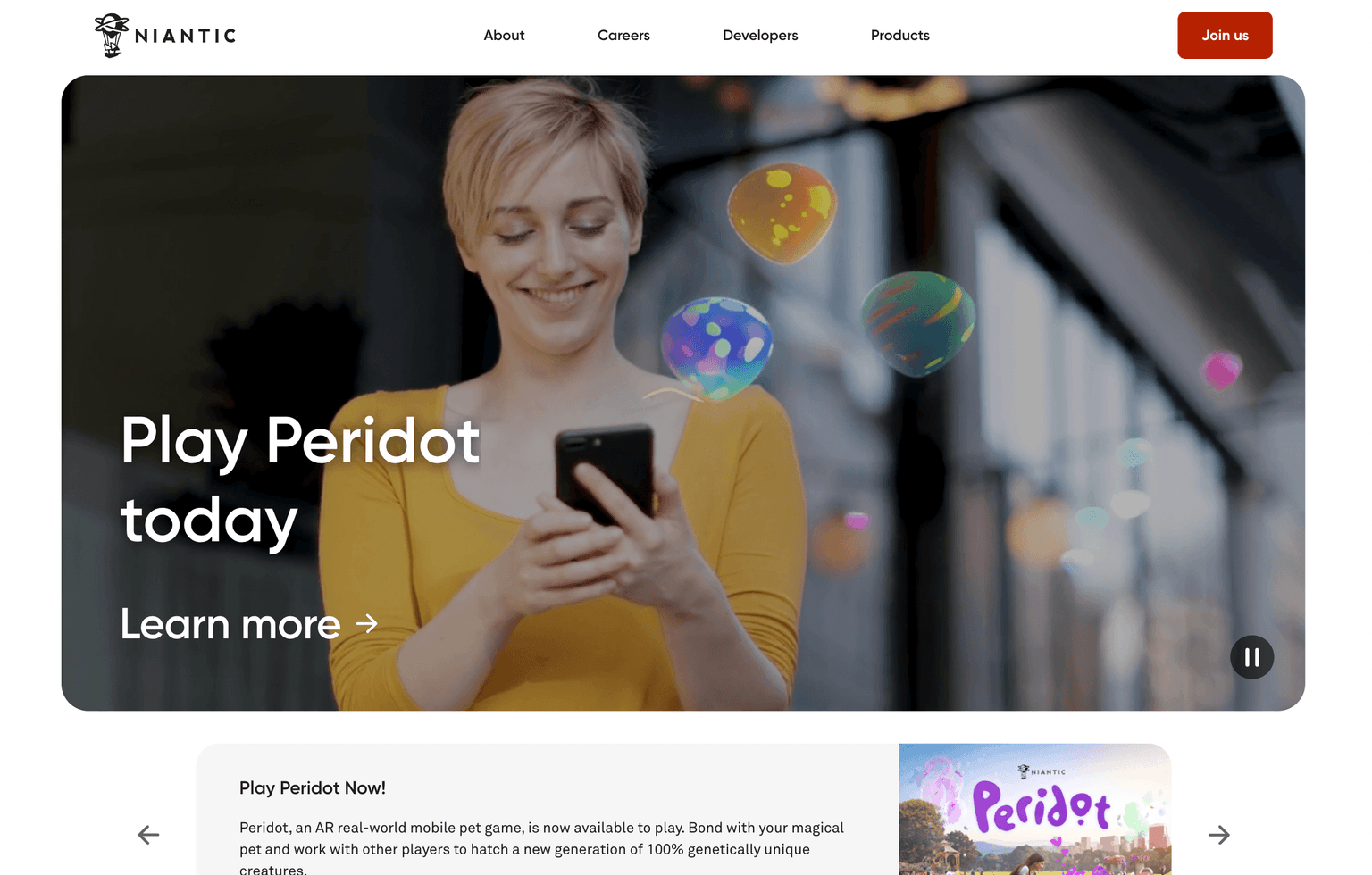
Acquired Niantic Labs
Acquired · May 2025
Niantic's games business — Pokémon GO, Pikmin Bloom, Monster Hunter Now — was sold to Scopely for $3.5B, closing 29 May 2025; the team was renamed Scopely Explore in July 2026 and nianticlabs.com now redirects there. The AR platform technology was spun out as Niantic Spatial, which is listed separately and still operating.
Acquired by Scopely.
Is Niantic Labs shut down?
Effectively, yes. Niantic Labs was acquired by Scopely and the standalone product was sunset on May 29, 2025. Its record is preserved in the ToolDirectory.AI graveyard, our hand-reviewed registry of AI tools that shut down or were acquired.
What to use instead


Skydio
Autonomous drones powered by advanced AI for exceptional data capture in various applications.
Paid - Inquire
4.92
440

World Labs
Fei-Fei Li's spatial-intelligence company. Marble — World Labs' first commercial product — generates persistent, editable 3D worlds from text, photos, video.
Freemium
4.92
420

Tripo
Easy 2D to 3D generator that turns text and images into clean 3D models.
Freemium
4.91
410
Overview
Niantic Labs: Pioneering Augmented Reality Exploration
Niantic Labs is at the forefront of augmented reality (AR) technology, crafting experiences that not only entertain but also encourage users to explore the world around them. With a vision that AR can be a catalyst for positive change, Niantic believes in the potential of AR to motivate individuals to venture outdoors, engage with public spaces, and connect with others in their community.
Acquisition note (2025-2026): Niantic's games business was acquired by Scopely for $3.5B, closing 29 May 2025, and the team was renamed Scopely Explore in July 2026 — nianticlabs.com now redirects to Scopely. The AR/geospatial platform was spun out as Niantic Spatial, a separate company that is still operating.
Key Features:
- Mapping the World: Niantic, in collaboration with its community, is addressing one of AR's most significant challenges: creating a detailed map that allows developers to anchor digital content seamlessly to the physical world.
- LIGHTSHIP Platform: Niantic has unveiled its platform that powers its top AR experiences, making it accessible for developers to craft their unique AR applications.
- Realistic AR Experiences: The technology offers shared-state multiplayer, realistic occlusion, real-time meshing, and semantic segmentation, ensuring a lifelike AR experience.
Ideal Use Case:
Niantic's AR games and apps are perfect for individuals seeking an interactive and immersive experience that encourages outdoor exploration and social interaction. Whether you're a Pokémon enthusiast or someone looking for a novel way to engage with your surroundings, Niantic offers a unique blend of entertainment and real-world exploration.
Why use Niantic Labs:
- Engaging AR Experiences: Dive into games that merge the digital and physical worlds, offering a unique gaming experience.
- Community Collaboration: Be part of a community that contributes to mapping the world for enhanced AR experiences.
- Innovative Technology: Access state-of-the-art AR features that provide realistic and shared experiences.
FAQ
What does Niantic Labs create? Niantic Labs develops real-world augmented reality games and applications designed to encourage people to explore outdoors and interact with their physical surroundings. Their platform combines mobile gaming with location-based technology to create immersive experiences.
Who should use Niantic Labs? Niantic Labs is ideal for players and developers interested in location-based AR gaming experiences, as well as organizations looking to create outdoor exploration applications. It appeals to anyone seeking interactive entertainment that gets them moving in the real world.
What is the pricing structure for Niantic Labs? Niantic Labs operates on a paid model. For specific pricing details and available plans, visit the Niantic Labs pricing page for current information.
How does Niantic Labs compare to similar platforms? While Niantic Labs specializes in real-world AR gaming and exploration, alternatives like Skydio, World Labs, and Tripo offer different approaches to AR and 3D modeling. Your choice depends on whether you prioritize location-based gaming experiences or other AR and 3D development capabilities.
tl;dr:
Niantic Labs crafts immersive AR games and apps that merge the digital and physical realms, promoting outdoor exploration and community interaction. With cutting-edge technology and a vision for a connected world, Niantic stands out as a leader in real-world AR experiences.
Related
Looking for more options? Browse the Gaming & 3D Modeling directory or read our best AI 3D and gaming tools listicle. Niantic Labs is also tracked on Crunchbase.
Why Use Niantic Labs
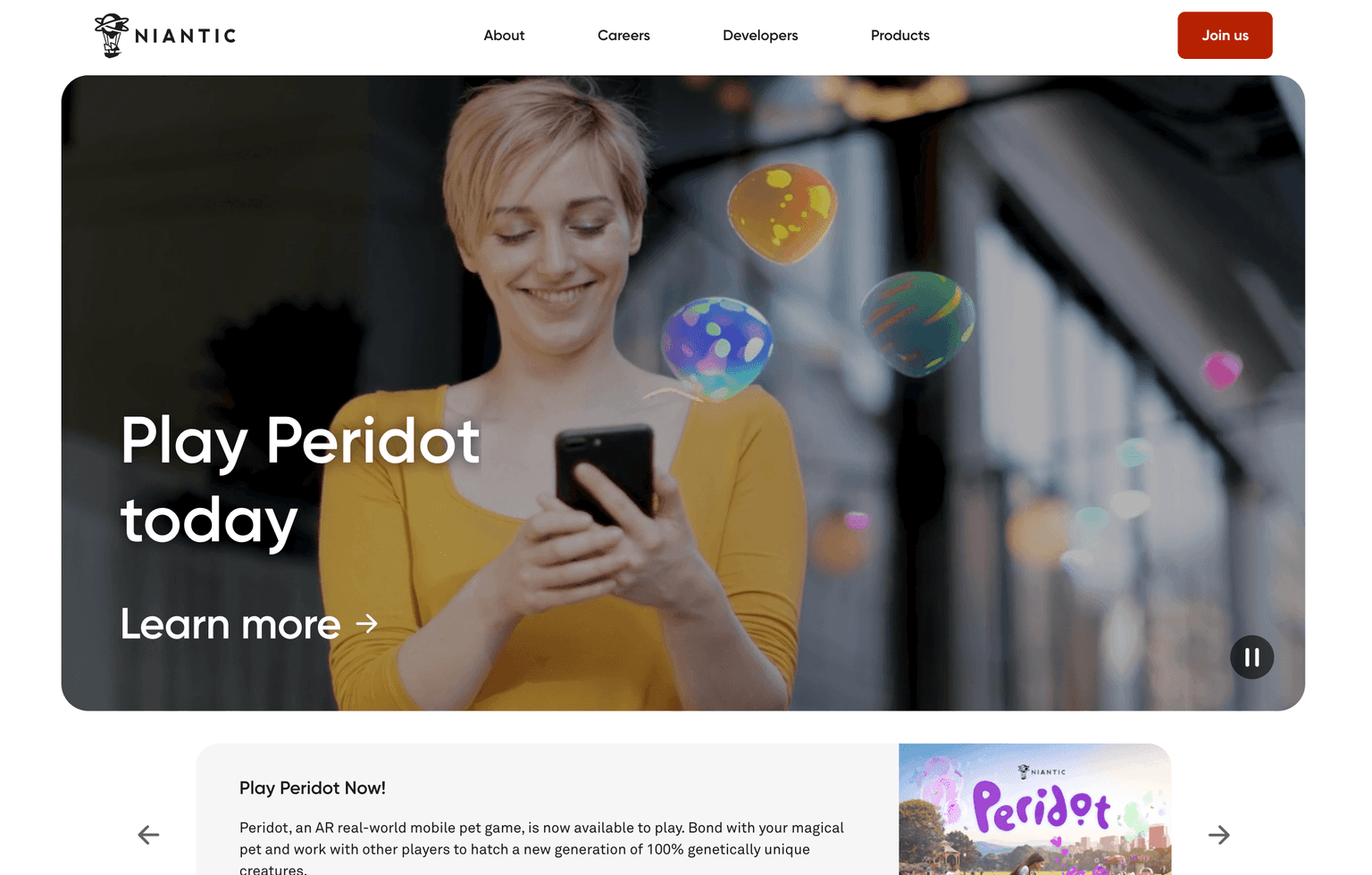
Editorial Review
Our take on Niantic Labs.

Scopely bought Niantic's games division for $3.5B in May 2025, taking Pokémon GO with it. The remaining company, still led by founder John Hanke, is now Niantic Spatial and builds geospatial AI rather than games.
What works
- Proved mainstream, location-based AR gameplay at global scale
- The games continue under Scopely; this was a split, not a shutdown
- Niantic Spatial retains founder leadership and the underlying mapping technology
What doesn't
- The entity reviewed here no longer exists in the form described — games and staff moved to Scopely on 29 May 2025
- Never a creator tool: no general SDK, partnerships by inquiry only
- Anyone evaluating the AR games should now be looking at Scopely, not Niantic
Split, not shut down. On 12 March 2025 Scopely agreed to buy Niantic's games division for $3.5 billion; the deal closed 29 May 2025. Pokémon GO, Pikmin Bloom, Monster Hunter Now, and the Campfire and Wayfarer companion services went across, along with more than 400 staff. The games are still running — under Scopely.
What remained became Niantic Spatial, a standalone company still led by founder and CEO John Hanke, keeping Ingress Prime and Peridot and refocusing on geospatial AI and real-world 3D mapping rather than consumer games. So the technology and the leadership both continue; what changed is that the games and the company that made them are now separate businesses.
Where that leaves you: if you were evaluating Niantic as an AR games publisher, the subject of that evaluation is Scopely now. If you were interested in the mapping and spatial-computing layer underneath Pokémon GO, that is Niantic Spatial, and it remains a platform sold through partnership rather than a self-serve creator toolkit.