GitHub
The platform where the world builds software — repos, pull requests, Actions CI/CD, and Copilot — with an official MCP server so AI agents can work in your repositories.
Overview
GitHub
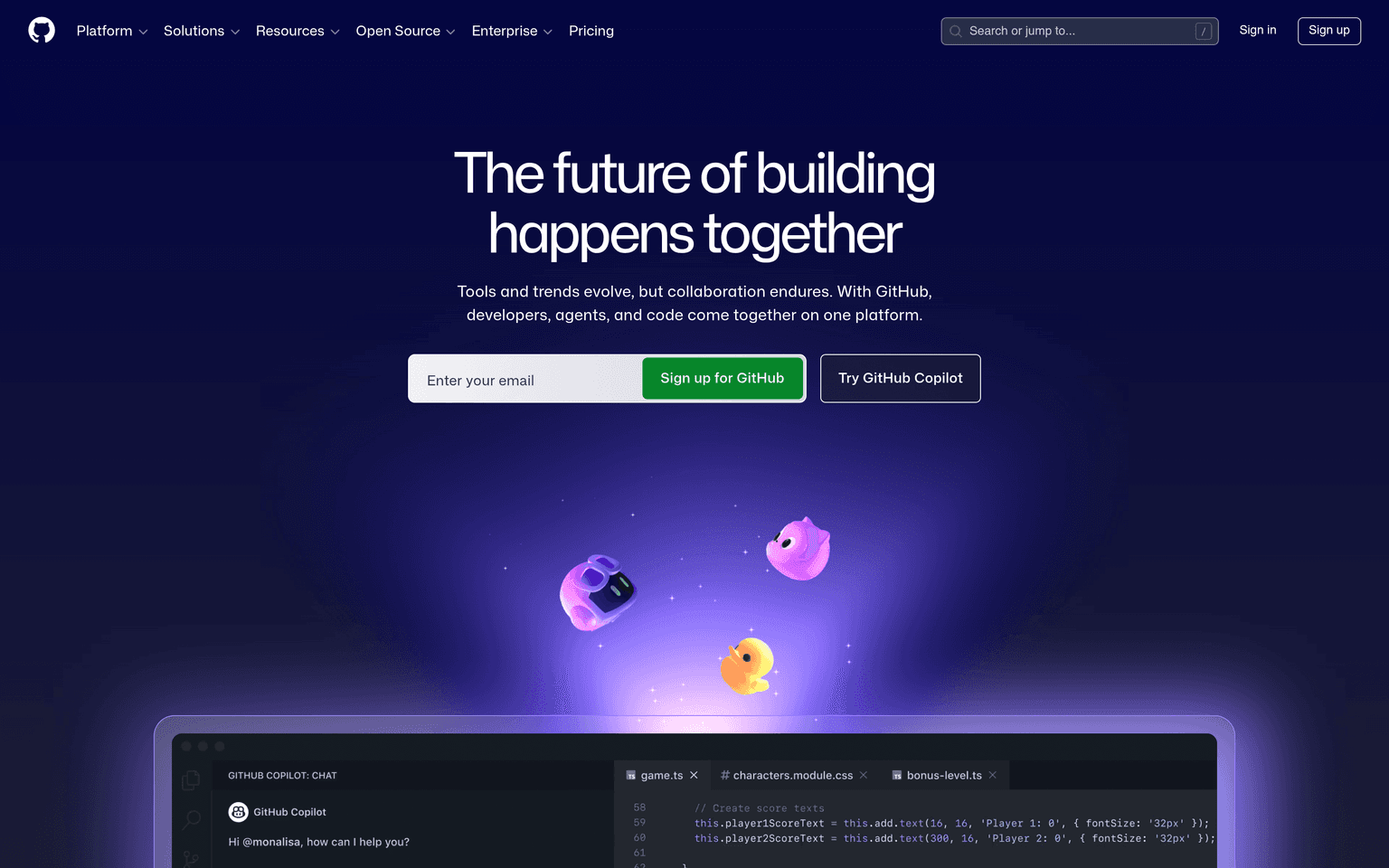
GitHub is the platform where developers host code, review pull requests, run CI/CD with Actions, track issues, and ship software together. It is the system of record for most of the world's open and private source code, and the home of the Copilot AI coding assistant.
For AI agents, GitHub ships an official MCP server (github-mcp-server) that lets a model work inside your repositories through the Model Context Protocol — read and search code, open and review pull requests, manage issues, and inspect Actions runs — in natural language instead of a hand-built integration. Because it is first-party, it tracks GitHub's real API and authenticates properly against your account.
Combined with Copilot, GitHub is both where code lives and where AI agents increasingly do the work.
FAQ
Does GitHub have an official MCP server? Yes. The github-mcp-server runs remotely with OAuth or locally with a personal access token or GitHub App, including on GitHub Enterprise Server. It offers more than twenty toolsets covering repositories, issues, pull requests, Actions, code security, Dependabot and projects, plus a read-only mode, and supports the July 2026 MCP specification.
What is the GitHub Copilot coding agent? An agent you assign an issue to. It works in a sandbox powered by GitHub Actions, makes the change, and pushes a draft pull request for your review. It is included on the paid individual Copilot tiers and consumes usage credits while it runs.
How is GitHub Copilot billed in 2026? Since June 2026 every plan meters AI usage in credits, with a monthly allotment per tier and pay-as-you-go beyond it. From October 2026, Business and Enterprise seats are charged upfront and are not refunded when revoked.
Why Use GitHub
FAQ
Editorial Review
Our take on GitHub.

The most complete first-party MCP server we track and a coding agent that lives inside the pull-request workflow, from a platform whose billing and policy for AI have changed three times this year and will change again in October.
What works
- Remote OAuth MCP server with twenty-plus granular toolsets and a read-only mode
- Coding agent works inside the pull-request and Actions workflow teams already use
- Tracks the MCP specification closely, with releases weeks after each revision
What doesn't
- Billing and policy changed in May, June and September, with prepaid seats from October
- Agent sessions consume usage credits quickly, so plan prices are a floor
GitHub's official MCP server is the reference point for the category: a remote endpoint with OAuth, a local build for self-hosted installs, more than twenty toolsets covering repositories, issues, pull requests, Actions, code security and projects, and a read-only mode for agents you do not fully trust. It tracks the protocol closely, with the July 2026 specification supported and a release as recent as September 8. If you want an agent to work inside your code without building the integration yourself, this is where the standard is set.
The second reason it is here is Copilot's coding agent, which takes an assigned issue, works in an Actions-powered sandbox and pushes a draft pull request for review. That is the right shape for a team already living in pull requests, and it is included on the paid individual tiers.
What a buyer has to track is the ground moving underneath. Usage-based AI credits arrived on every plan in June; a new top individual tier appeared in May; the chat, mobile and cloud-agent experiences are being unified at the end of September; and from October, business and enterprise seats are charged upfront with no refund on revocation. Agent sessions burn credits quickly, so the plan price is a floor. And GitHub itself no longer has a chief executive of its own, having been folded into Microsoft's AI organisation in 2025, which changes who decides its roadmap. None of that makes the product worse; it makes the contract worth reading each quarter.
User Reviews
Similar Tools