CloudZero
Financial control plane attributing AI and cloud spend to customers, features, and unit economics.
Overview
CloudZero: A financial control plane for AI and cloud economics
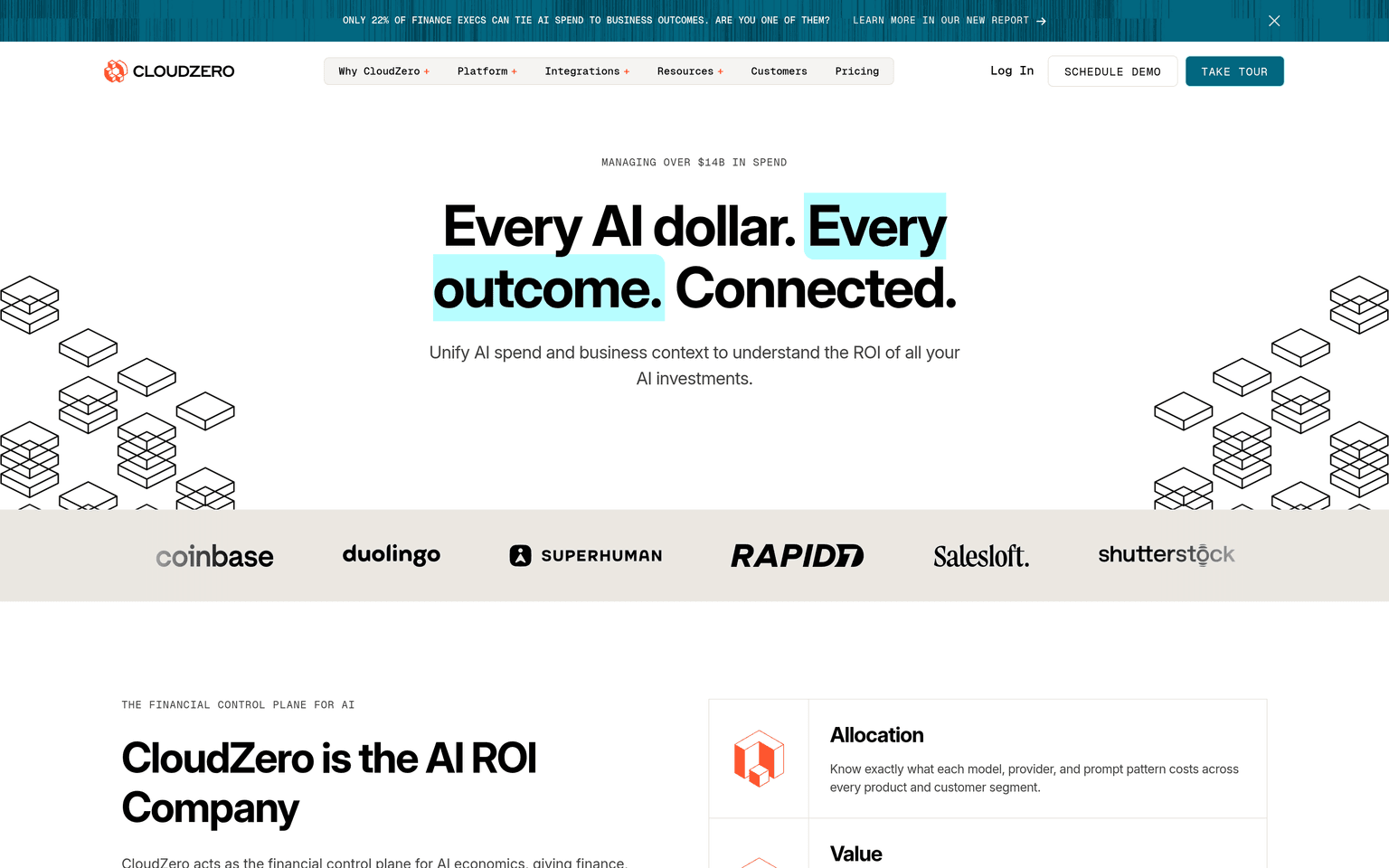
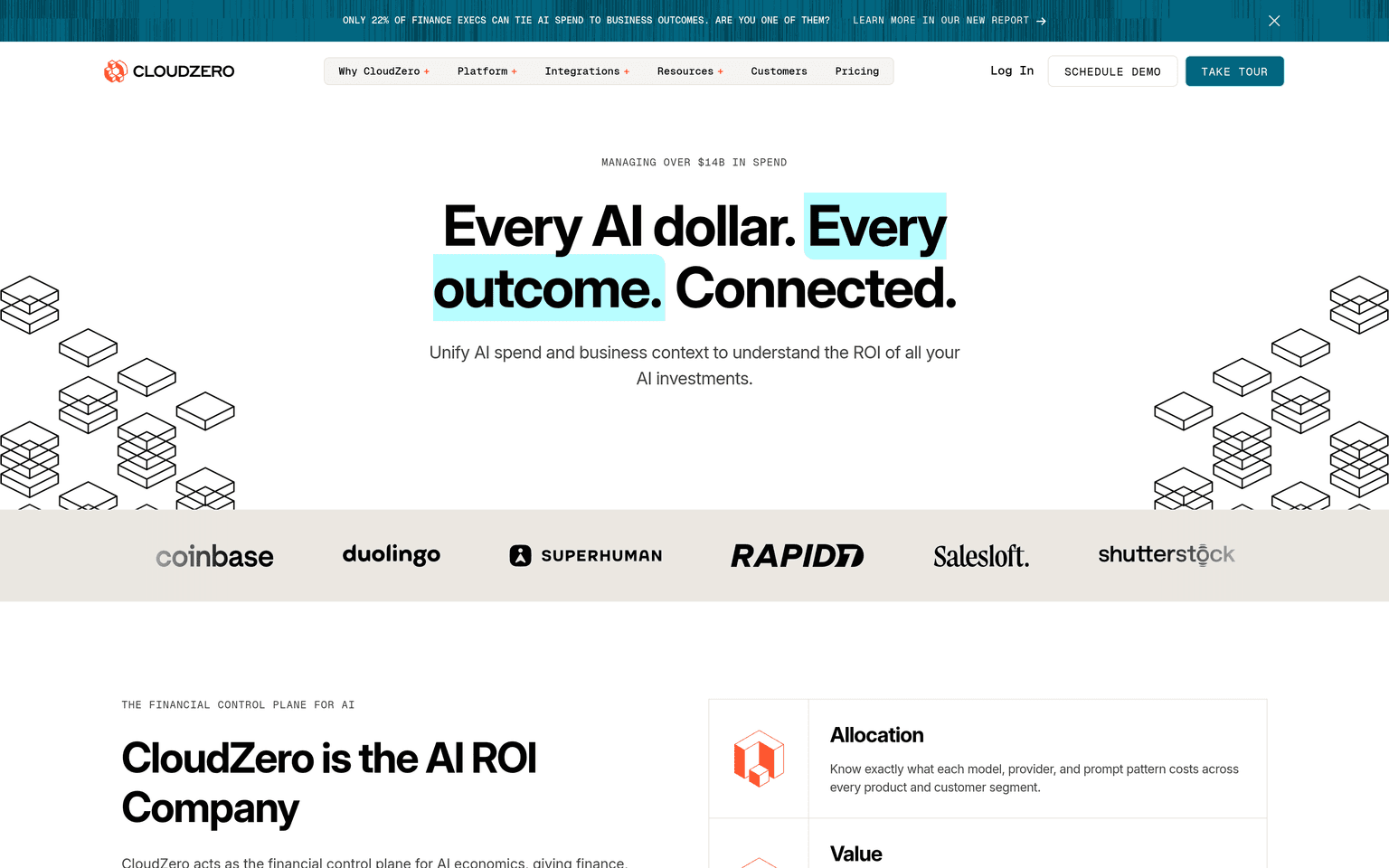
CloudZero unifies cost data from AI platforms, cloud providers, Kubernetes clusters, and SaaS tools into a single system that answers the question finance and engineering both keep asking: what is this actually costing us, and is it worth it? Rather than stopping at account- or service-level bills, the platform allocates spend to the dimensions that matter to the business — cost per customer, per feature, per team, per transaction, and per P&L line.
As AI workloads have pushed cloud bills into new territory, CloudZero has positioned itself around AI economics specifically. Its AI Hub tracks model and provider costs, maps AI spending to business outcomes, and monitors spend in near real time through streaming telemetry, so a runaway inference bill surfaces in seconds instead of at month-end.
Key Features
- Multi-dimensional cost allocation across AI, cloud, Kubernetes, and SaaS sources
- Unit economics analysis: cost per customer, per feature, per team, and per transaction
- AI Hub tracking costs across models, providers, and prompt patterns
- Anomaly detection with alerts within seconds via streaming telemetry
- Budgeting, forecasting, and an Explorer tool for ad hoc spend analysis
- Unlimited cost sources, users, dimensions, and dashboards on every subscription
Ideal Use Case
CloudZero suits engineering-led SaaS and AI companies where cloud and inference costs are a material line item and leadership needs spend tied to revenue. FinOps teams use it to replace spreadsheet-based allocation, product leaders use unit-cost metrics to price features, and platform teams use anomaly alerts to catch cost regressions before they compound. It is a fit for organizations ready to invest in cost intelligence as a discipline, not a one-off audit.
How CloudZero differentiates
CloudZero raised a $56M Series C in May 2025 led by BlueCrest Capital Management and Innovius Capital, with a strategic investment from MongoDB, and reports managing over $14 billion in customer spend. Named customers include Coinbase, Duolingo, Rapid7, Superhuman, Salesloft, and Shutterstock. Where legacy cost tools report what you spent by service, CloudZero's bet is attribution — connecting every dollar of AI and cloud spend to a customer, feature, or business outcome so teams can manage cost like a product metric.
FAQ
How much does CloudZero cost? Pricing is custom-quoted based on the scale and complexity of your AI and cloud environment. All subscriptions include unlimited cost sources, users, dimensions, and dashboards.
Does CloudZero track AI and LLM costs specifically? Yes. The AI Hub tracks spend across models and providers, maps AI costs to business outcomes, and monitors usage patterns in near real time via streaming telemetry.
Which cost sources does it support? CloudZero ingests costs from major cloud providers, Kubernetes, AI platforms, and SaaS tools, and its AnyCost capability lets teams stream in custom cost data from any source.
Who uses CloudZero? Customers include Coinbase, Duolingo, Rapid7, Superhuman, Salesloft, and Shutterstock. The platform is FinOps Certified and AICPA SOC compliant.
tl;dr
CloudZero is a financial control plane that attributes AI, cloud, and Kubernetes spend to customers, features, and unit economics instead of just services. Backed by a $56M Series C and managing $14B+ in customer spend for companies like Coinbase and Duolingo, it turns cost data into a business metric. Pricing is quote-based.
Related
Looking for more options? Browse the BI & Analytics directory or read our best AI analytics tools listicle. CloudZero is also tracked on Crunchbase.
Why Use CloudZero
User Reviews
Similar Tools