Substack
Substack is a newsletter platform that bundles email, a website and paid subscriptions with no monthly fee.
Overview
Substack: Newsletter Publishing With Built-In Paid Subscriptions
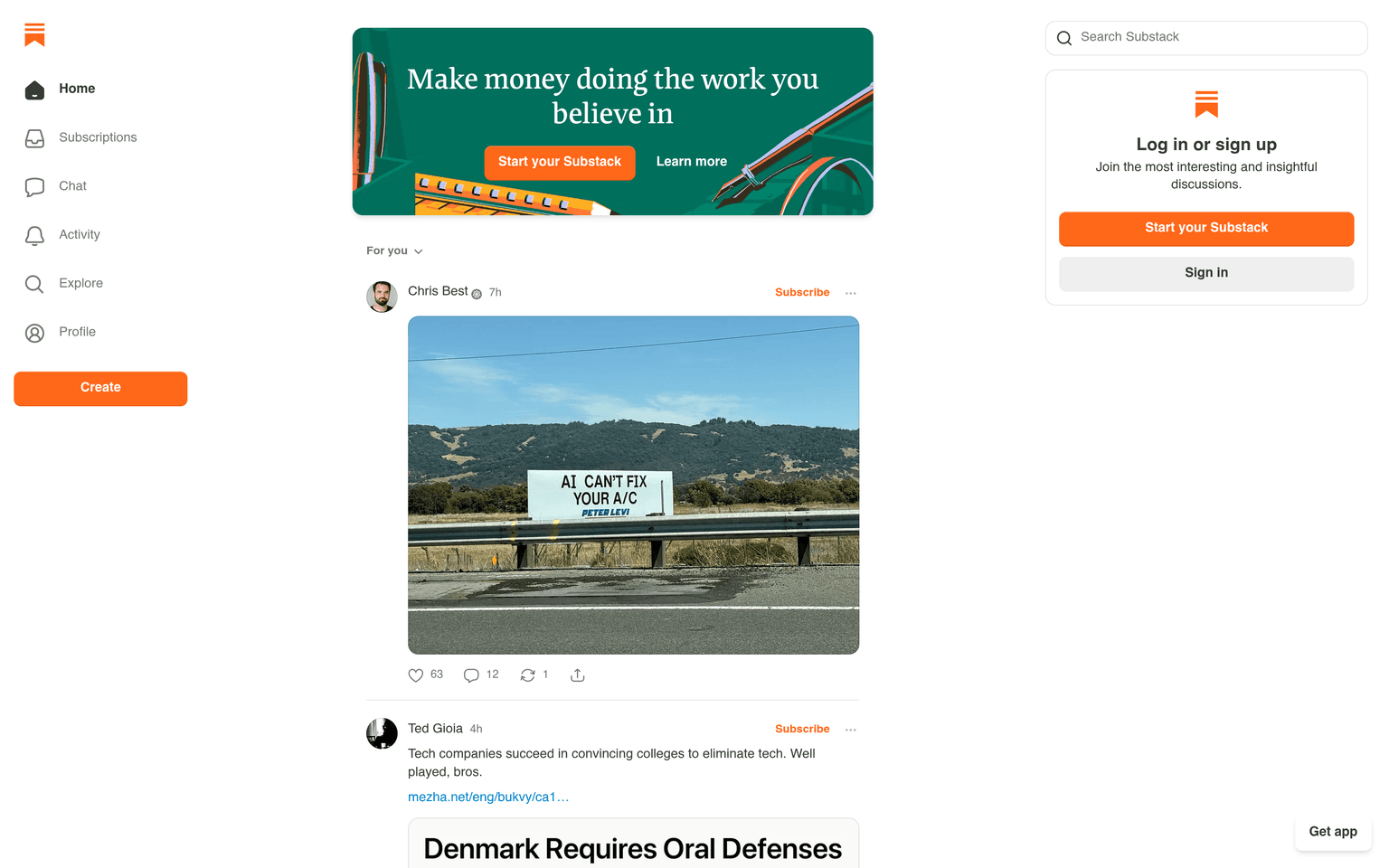
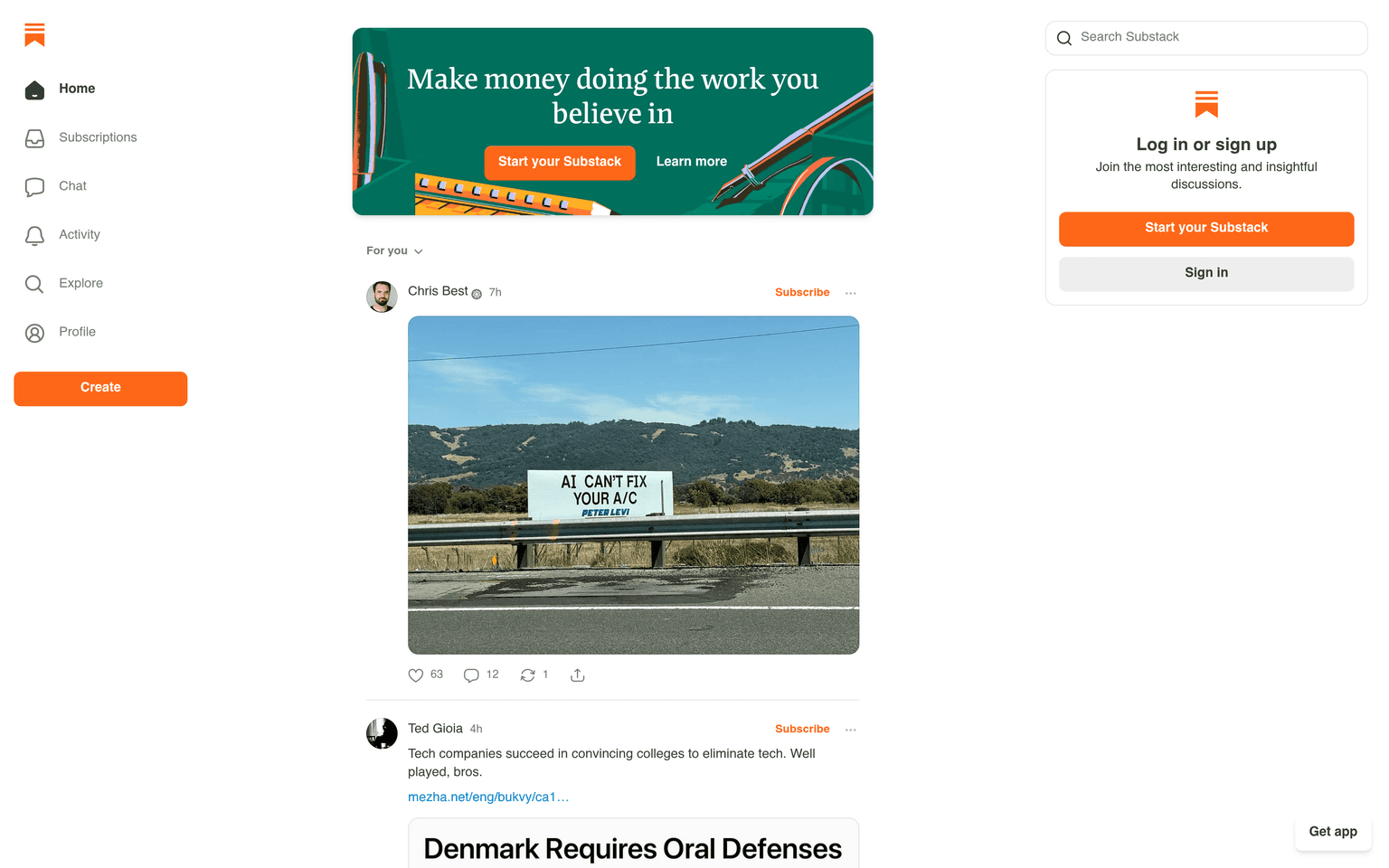
Substack is a publishing platform that combines a newsletter, a website, and a subscription billing system in one product. Writers publish a post, it lands in subscriber inboxes and on a public archive page at the same time, and any post can be placed behind a paywall. There is no monthly platform fee — Substack takes 10% of paid subscription revenue, with Stripe's processing fees on top, so the cost only starts when the publication starts earning.
The platform has expanded well past email. Publications can run podcasts and video, readers discover new writing through Notes and the Substack app, and the recommendation network lets publications refer subscribers to each other. That network effect is the reason many writers stay: distribution is part of the product rather than something you build separately.
Production credibility: Substack reports millions of paid subscriptions across the network, with its top publications earning seven figures annually. It raised a Series B led by Andreessen Horowitz and ran a community funding round in 2023.
Key Features
- Email newsletter and public web archive published from a single post
- Native paid subscriptions and paywalls with Stripe-backed billing
- AI transcription for podcast and video episodes, editable before publishing
- AI writing detection powered by Pangram, showing an estimated human / AI-assisted / AI-generated split on posts and notes
- Optional AI author's note so writers can disclose how they use AI
- Notes, the reader app, and cross-publication recommendations for discovery
- No subscriber or send limits on free publications
Ideal Use Case
Substack fits independent writers and small editorial teams whose business is reader revenue rather than advertising, and who value built-in discovery over configurability. It is strongest early on: no fixed cost, no send limits, and a recommendation network that supplies subscribers a new publication cannot generate alone. Publications billing more than a few thousand dollars a month usually re-run the maths, because 10% of revenue eventually exceeds a flat platform fee.
How Substack differentiates
Most newsletter tools sell software and charge by list size. Substack sells distribution and charges by outcome — it earns nothing until a writer earns, which aligns the platform with the publication in a way per-subscriber pricing does not. Its AI position is also deliberately inverted: where competitors ship AI drafting assistants, Substack shipped an AI detector in July 2026 and a disclosure mechanism, treating provenance as the feature its audience cares about. Transcription aside, Substack does not want to write your newsletter for you, and says so.
FAQ
How much does Substack cost? Publishing is free with no subscriber or send limits. If you charge readers, Substack takes 10% of subscription revenue and Stripe takes roughly 2.9% + $0.30 per transaction.
Does Substack have AI features? Yes, though fewer than most rivals. It offers AI transcription for podcast and video episodes, and since July 2026 an AI-detection tool built with Pangram that estimates how much of a post was AI-written, plus an optional AI author's note for disclosure.
Can I move my list off Substack? Yes. Subscriber lists can be exported, and paid subscriptions are held in your own Stripe account.
Substack or beehiiv? Substack suits writers who want discovery and zero fixed cost and accept a revenue share. beehiiv suits operators who want ad and referral monetisation, deeper analytics, and a flat fee that does not scale with subscription revenue.
tl;dr
Substack is a free-to-publish newsletter platform that monetises through a 10% cut of paid subscriptions rather than a monthly fee, bundling email, a website, podcasts, video, and a cross-publication recommendation network. Its AI work runs against the grain: transcription plus an AI-writing detector and disclosure notes, not a drafting assistant.
Why Use Substack
FAQ
Editorial Review
Our take on Substack.

A newsletter platform whose AI story is about provenance rather than production: transcription, narration and a reader-visible detector, no drafting tools and no agent surface, on a revenue-share model that its biggest writers keep leaving over.
What works
- Reader-visible AI detection with author disclosure is unique among newsletter platforms
- No monthly fee; paid subscriptions and the subscriber list are portable via your own Stripe account
- Transcription and narration cover the audio and video formats it now pushes
What doesn't
- No drafting, generation or agent features; the AI angle is entirely defensive
- Detector false-positive backlash and a revenue share the largest writers keep leaving over
Substack belongs in an AI directory for an unusual reason. It has shipped almost no generative features: automatic transcripts for audio and video posts, text-to-speech narration, and since July 2026 a detector built with Pangram that estimates how much of a post, note or comment was written by AI, with an optional author's note for disclosure and no penalties attached. Writers can also tell AI crawlers not to train on their publication, a signal only compliant crawlers honour and one that may reduce discovery in AI search. That is a deliberate stance, and for readers who care whether a human wrote what they are paying for, it is a real product.
The economics are the other half of the decision. Publishing is free with no subscriber limits; if you charge, Substack takes a tenth of subscription revenue on top of card processing, and your paid list lives in your own Stripe account, so leaving is possible. The company raised a large round in 2025 and has not announced another.
Two cautions. The detector drew an immediate backlash from writers over false positives, and how that plays out will decide whether the provenance angle is a feature or a liability. And the take rate is why a steady stream of the largest publications has moved to flat-fee rivals. If you want AI to help you write, this is the wrong tool; if you want to prove you did not use it, it is currently the only one.
User Reviews
Similar Tools