Obot AI
Open-source MCP gateway adding OAuth, access control, and audit logging between AI agents and tools.
Overview
Obot AI: an open-source gateway that puts MCP under IT control
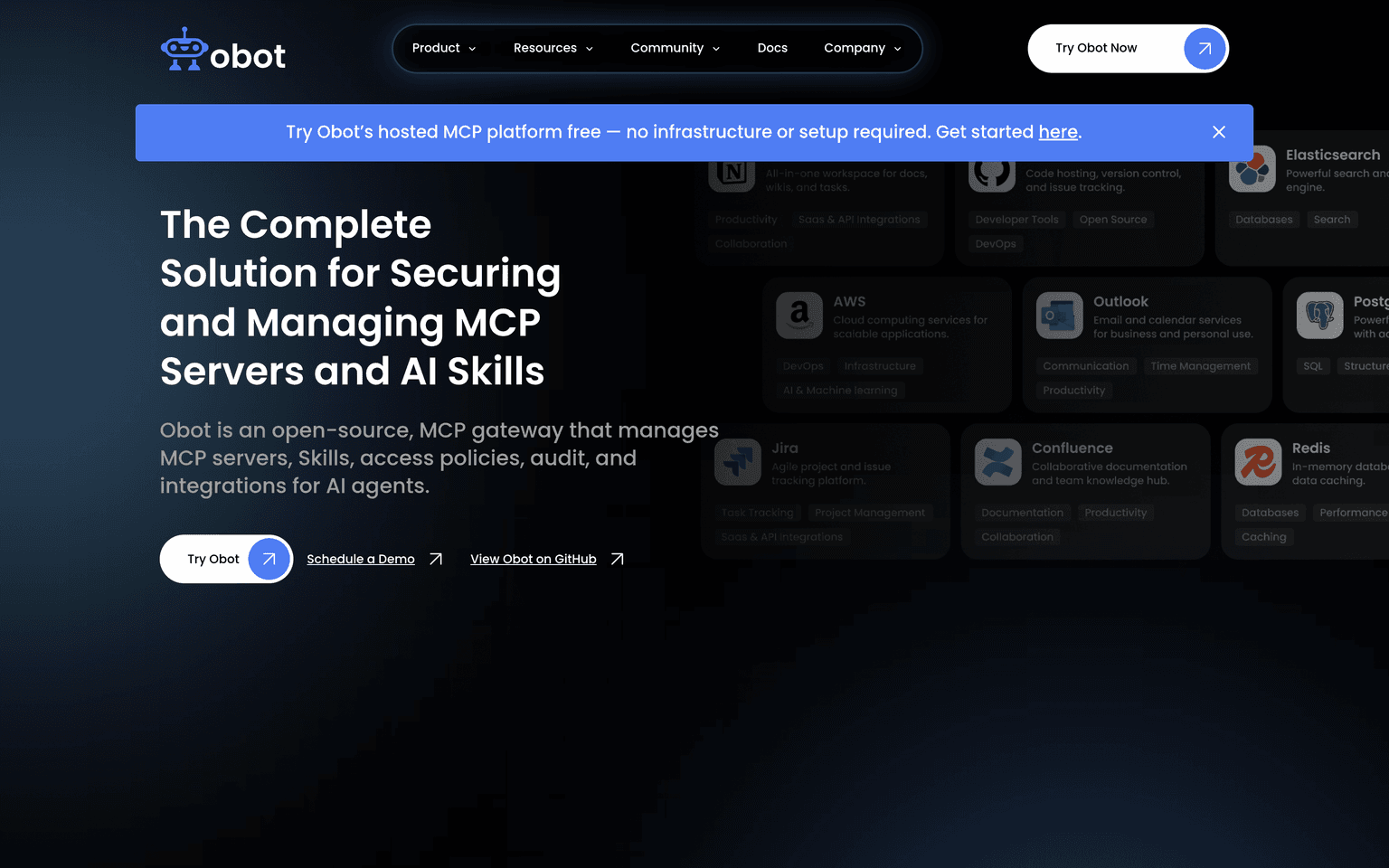
Obot AI — the company formerly known as Acorn Labs — builds an open-source MCP gateway: a control plane that sits between AI agents and the Model Context Protocol servers they call. As coding agents and AI assistants spread through an organization, each MCP connection is a new door into internal systems. Obot centralizes those doors, handling OAuth authentication, access policies, security controls, and audit logging so IT and security teams can see and govern what agents actually touch.
The core gateway is MIT-licensed and free to self-host on any Kubernetes cluster, and Obot also offers a hosted MCP platform that is free to try with no infrastructure required. A paid Enterprise edition adds Okta and Microsoft Entra identity integration, advanced governance features, and commercial support. The company also maintains Nanobot, an open-source MCP agent framework.
Key Features
- Central control plane to define access policies, onboard MCP servers, track usage, and troubleshoot from a UI or GitOps workflow
- Universal MCP hosting and proxying covering local, remote, and multi-tenant servers with secure routing
- Built-in MCP catalog and skills registry with schema visibility and documentation for structured discovery
- OAuth identity integration with Google and GitHub, plus Okta and Microsoft Entra in the Enterprise edition
- Fine-grained, tool-level permissions and policy enforcement per user and per agent
- Monitoring and audit logging of agent-to-tool traffic for compliance and incident review
Ideal Use Case
Platform, IT, and security teams rolling out coding agents and MCP-enabled assistants across an engineering organization. Instead of every developer wiring ad-hoc MCP servers to production credentials, Obot gives the organization one governed catalog: users discover approved servers, authenticate through corporate identity, and every tool call is permissioned and logged.
How Obot AI differentiates
Obot raised a $35M seed round in September 2025 — co-led by Mayfield Fund and Nexus Venture Partners — one of the largest seeds in the MCP infrastructure space. Its founding team previously created Rancher Labs (acquired by SUSE) and Cloud.com (acquired by Citrix), a track record of turning open-source infrastructure into enterprise standards. The gateway itself is MIT-licensed and developed in the open at github.com/obot-platform/obot.
FAQ
Is Obot really open source? Yes. The Obot MCP Gateway is MIT-licensed and free to download and self-host on any Kubernetes cluster; the code is public on GitHub.
What does the Enterprise edition add? Okta and Microsoft Entra identity integration, advanced governance capabilities, and commercial support on top of the open-source core.
Do I need my own infrastructure to try it? No. Obot offers a hosted MCP platform that is free to try with no infrastructure or setup required.
How does Obot secure MCP connections? Through OAuth-based authentication, tool-level access policies, and audit logging, all enforced centrally at the gateway rather than per client.
tl;dr
Obot AI is an MIT-licensed MCP gateway from the Rancher Labs founders: one control plane that authenticates, permissions, and audits every connection between AI agents and MCP servers, with $35M in seed backing.
Related
Looking for more options? Browse the Security & Governance directory or read our best AI security tools listicle. Obot AI is also tracked on Crunchbase.
Why Use Obot AI
User Reviews
Similar Tools