Future AGI
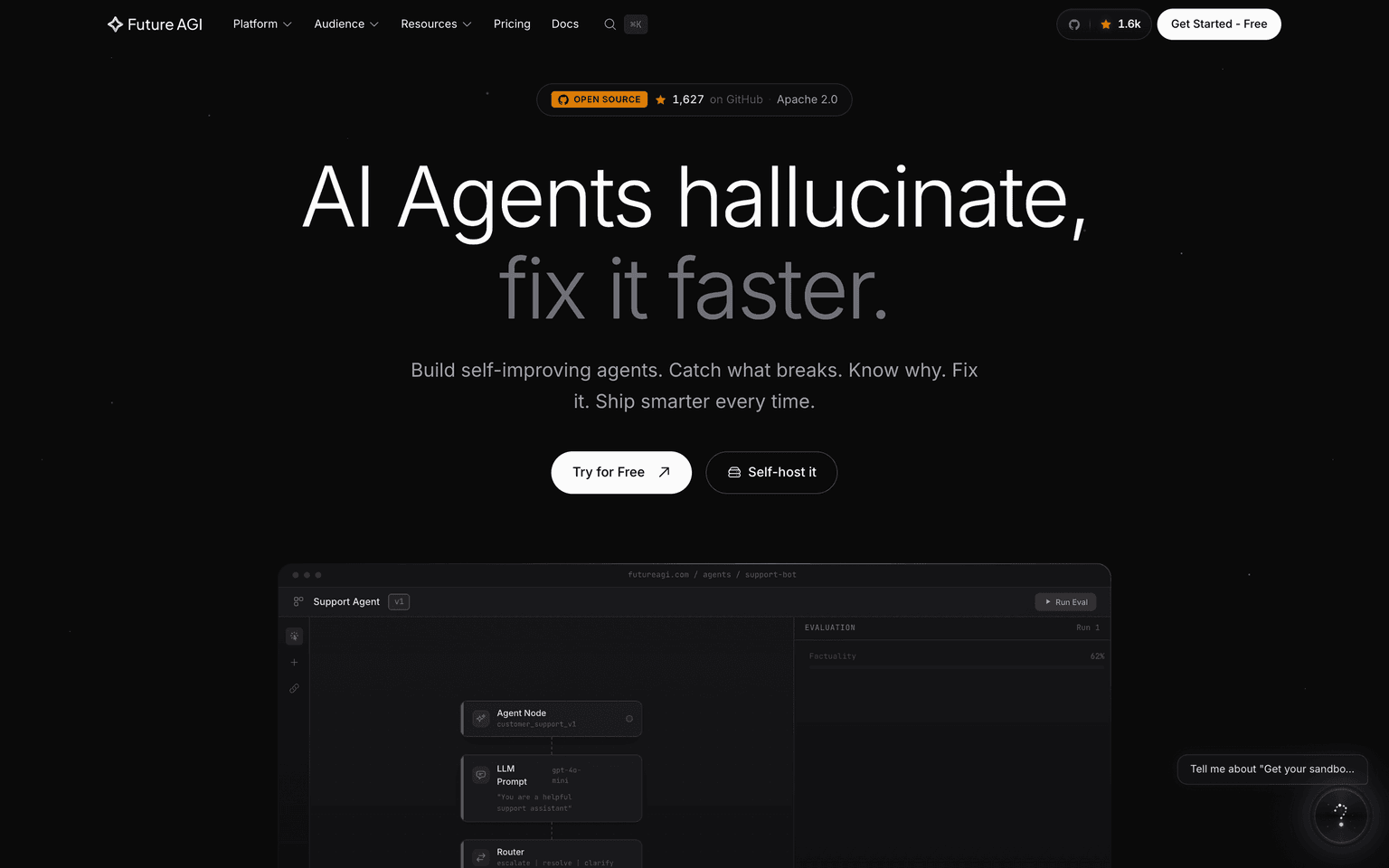
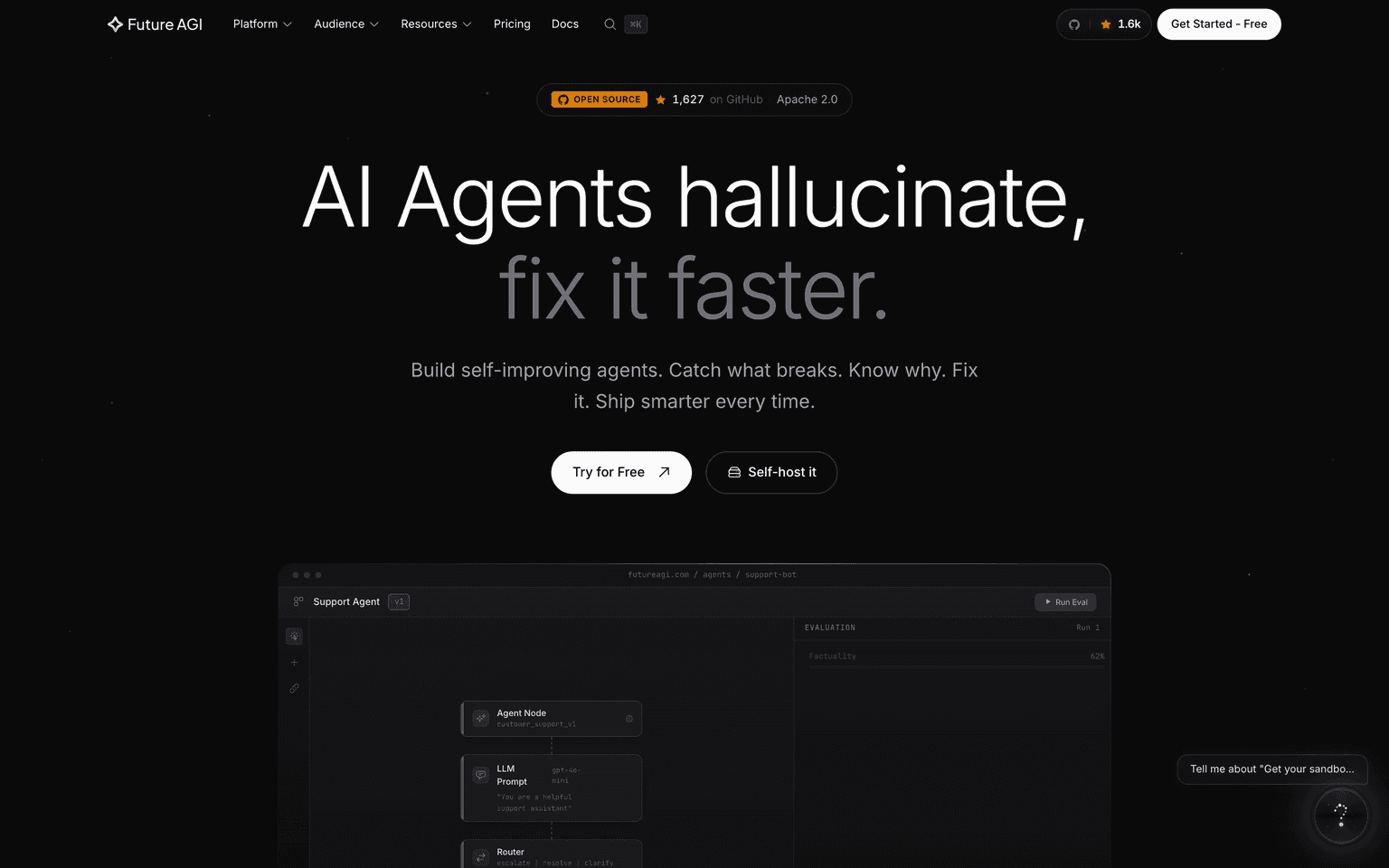
Future AGI is an open-source platform to evaluate, trace, and guardrail LLM and AI-agent apps, then optimize them from production feedback.
Overview
Future AGI
Future AGI is an open-source, end-to-end platform for evaluating, observing, and improving LLM and AI-agent applications. It pulls the work that is usually spread across separate tools — simulation, evaluation, tracing, guardrails, and optimization — into one connected loop, so a team can catch what an agent gets wrong, see why, and ship a fix. Future AGI ships more than 70 built-in evaluation templates covering quality, safety, factuality, RAG retrieval, format, bias, and audio and image checks; an agent IDE and experiments for iterating across models and parameters; OpenTelemetry-based tracing; real-time guardrails that block harmful output, PII, and compliance violations; and an LLM gateway. It is Apache-2.0 licensed and self-hostable, and it also offers a hosted free tier.
Production credibility: Future AGI is developed in the open — the platform is Apache-2.0 licensed on GitHub, where the main repository carries over 1,600 stars, and it can run fully self-hosted so data never leaves your network. It works with the models teams already use, including OpenAI, Anthropic Claude, and Google Gemini, and instruments applications through OpenTelemetry rather than a proprietary agent. The project maintains public documentation, SDK and API references, and a Discord community. Company ownership, funding, and team details are not published on the marketing site, so evaluate it on the open-source code, the docs, and the free tier.
Key Features
- 70+ built-in evaluation templates spanning quality, safety, factuality, RAG retrieval, format, bias, and audio/image checks
- Simulations and multi-turn, persona-based scenarios to test agents against realistic edge cases before launch
- OpenTelemetry-based tracing with end-to-end spans, timing, and an error feed that triages agent failures
- Real-time guardrails that block harmful output, PII exposure, and compliance violations in production
- AI optimization that feeds production and evaluation signals back into the next version of an agent
- An LLM gateway with budgets, webhooks, and MCP tool support, plus dashboards and anomaly alerting
- Synthetic data generation and dataset management that grow evaluation sets from tests and live traffic
- Apache-2.0 licensed and self-hostable, with SDKs, an API, and a hosted free tier
Ideal Use Case
Future AGI fits engineering and product teams shipping LLM features or autonomous agents — customer support bots, voice agents, RAG and search, and coding agents — who need evaluation and observability in one place instead of stitching together a tracer, a separate eval framework, and a guardrails layer. The self-hostable, Apache-2.0 core makes it a particular fit for teams with data-residency or compliance constraints that rule out sending traces to a closed SaaS. It is less suited to someone who only wants a hosted dashboard with no setup: the platform's breadth — simulations, an agent IDE, a gateway, guardrails — rewards teams willing to wire it into their pipeline, and the free hosted tier is the low-friction way to try that before self-hosting.
How Future AGI differentiates
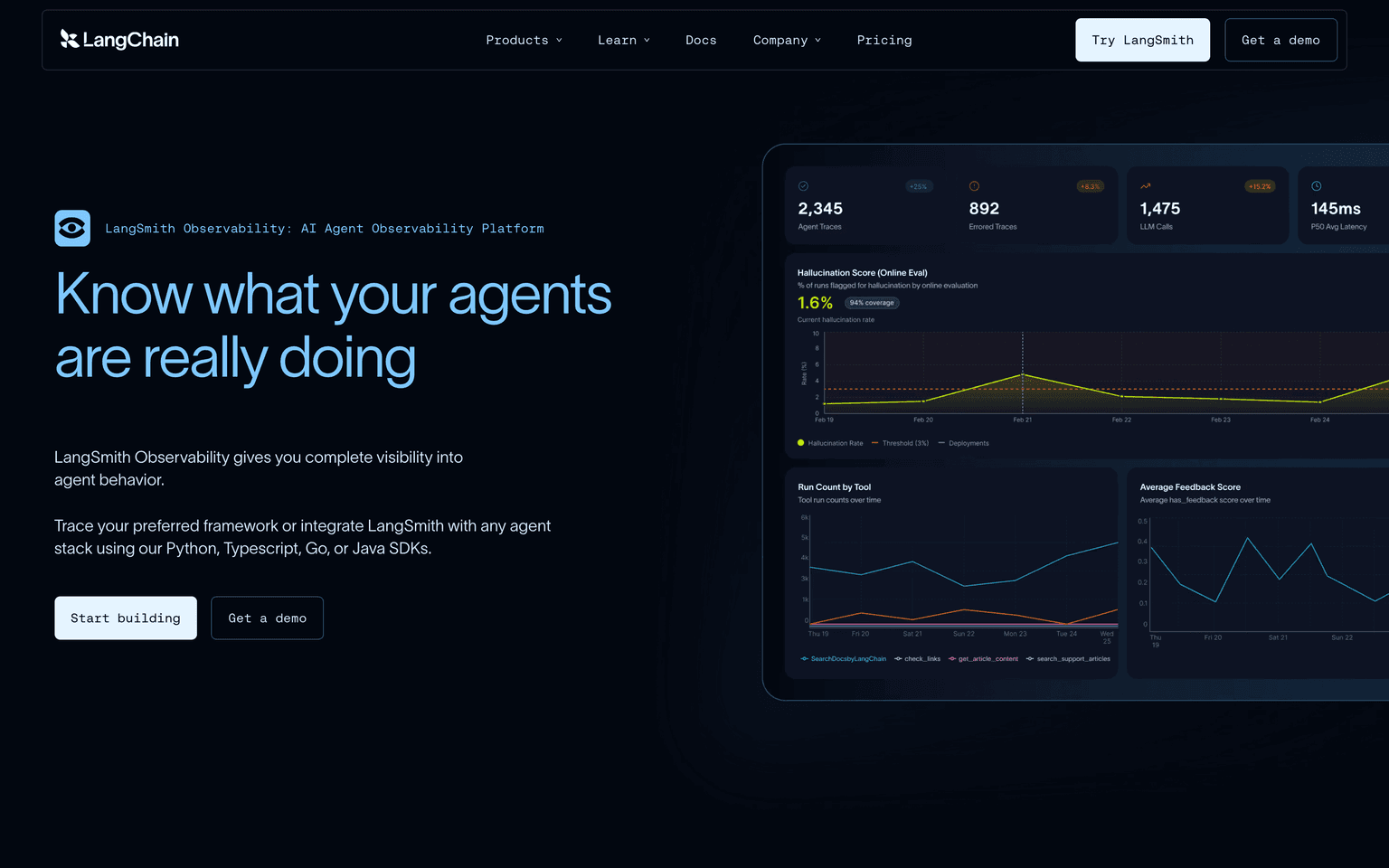
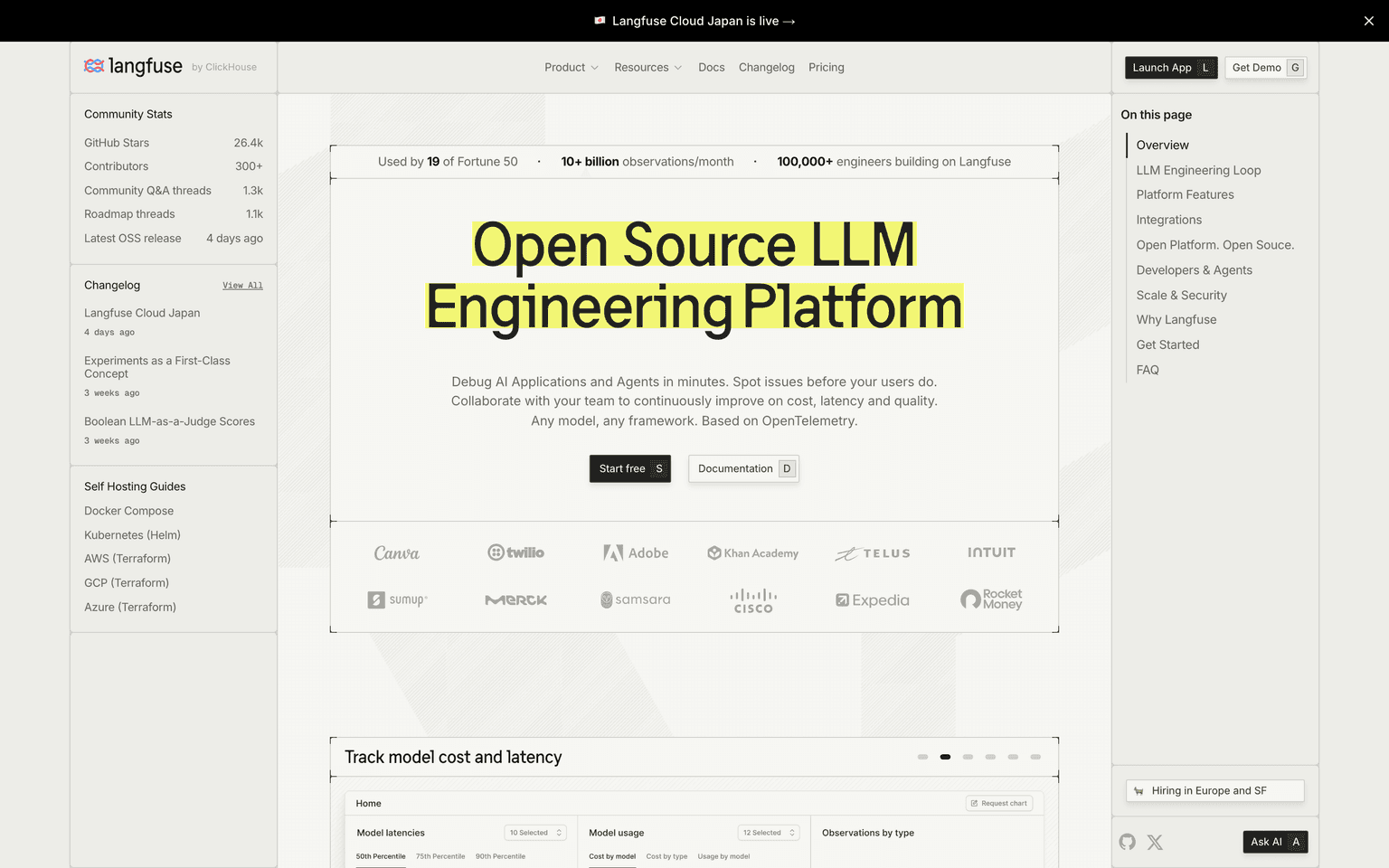
Most tools in this space pick a lane: LangSmith and Langfuse center on tracing and evaluation, guardrails products handle safety, and gateways route traffic. Future AGI's distinguishing choice is to put all of those behind one Apache-2.0, self-hostable platform and close the loop with optimization — evaluation and production signals are fed back to improve the next version of an agent rather than just reported on a dashboard. The open licence and self-hosting are the sharpest differentiator against the mostly-closed commercial observability tools it competes with, and the built-in simulation and guardrail layers mean a team can test, ship, and protect an agent without adding a second or third vendor.
FAQ
Q: Is Future AGI open source? A: Yes. The platform is Apache-2.0 licensed, the main GitHub repository has over 1,600 stars, and it can be fully self-hosted so your data stays inside your network. A hosted version with a free tier is also available.
Q: What does Future AGI actually do? A: It combines evaluation, simulation, tracing, guardrails, and optimization for LLM and AI-agent applications in one platform. You test an agent against scenarios and 70+ eval templates, trace what happens in production via OpenTelemetry, block unsafe output with guardrails, and feed the results back to improve the next version.
Q: Which models and frameworks does it work with? A: Future AGI is model-agnostic and instruments apps through OpenTelemetry, so it works with providers including OpenAI, Anthropic Claude, and Google Gemini, and with the stack a team already runs rather than requiring a specific framework.
Q: How is it different from LangSmith or Langfuse? A: LangSmith and Langfuse focus on tracing and evaluation; Future AGI adds simulation, real-time guardrails, an LLM gateway, and an optimization loop in the same Apache-2.0, self-hostable platform, aiming to replace several separate tools rather than one.
Q: Is there a free version? A: Yes — the open-source project is free to self-host under Apache-2.0, and the hosted product offers a free tier to start on. Paid hosted plans exist for larger usage; specific pricing is on the Future AGI site.
tl;dr
Future AGI is an open-source (Apache-2.0), self-hostable platform that brings evaluation, simulation, tracing, guardrails, and optimization for LLM and AI-agent apps into one loop. It ships 70+ eval templates, OpenTelemetry tracing, real-time guardrails, and an LLM gateway, works with OpenAI, Claude, and Gemini, and has a hosted free tier. Best for engineering teams that want agent evaluation and observability without stitching together three vendors; the free tier is the way in before self-hosting.
Why Use Future AGI
User Reviews
Similar Tools